Artificial Studio in research

Researchers and university students use Artificial Studio's AI tools in their work, from a holography paper published in Optics Letters to an interactive 3D installation at Carnegie Mellon University. This page collects the projects we know about, explains how each one used our tools, and shows how to cite us.

Start for free

No credit card required

Artificial Studio in research

Features

01

Is AI used in scientific research?

Yes. Researchers use AI tools for tasks that used to take specialized hardware or hours of manual work, like estimating depth from a single photo, transcribing interviews, extracting formulas from scanned documents or generating 3D models. In the projects below, AI handled a supporting step, the depth map, so the researchers could focus on the part of the work that was actually new.

Is AI used in scientific research?
02

Computer-generated holography with a phone screen — Optics Letters, 2026

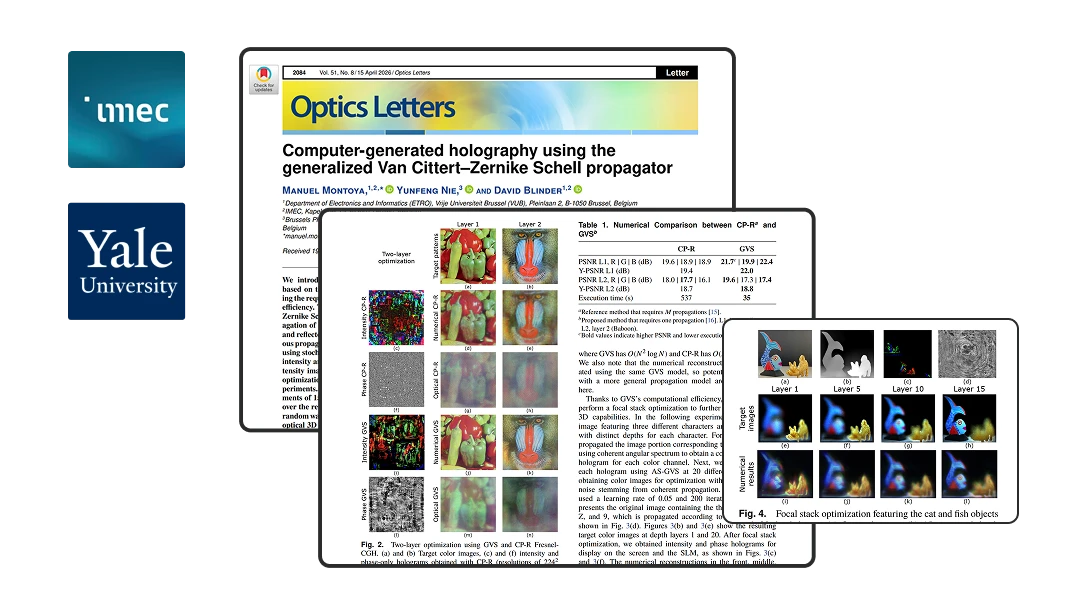
Manuel Montoya, Yunfeng Nie and David Blinder, from Vrije Universiteit Brussel and imec, published "Computer-generated holography using the generalized Van Cittert–Zernike Schell propagator" in Optics Letters (Vol. 51, No. 8, April 2026). Most holograms are made with lasers, which are expensive and create speckle noise. This team used the screen of an iPhone 12 Pro as a low-cost light source and a new propagation model that makes the computation about 15 times faster than the previous method. To show real 3D focus effects, they photographed two small figurines, a blue fish and a golden cat, and used Artificial Studio's free Image Depth Map tool to estimate a depth map from the photo. That depth map told the algorithm how far each part of the scene should be, so the hologram could bring different parts of the fish and the cat into focus across 20 depth layers. The depth map appears in Figure 4(b) of the paper, and the tool is cited as reference [21]. DOI: 10.1364/OL.595741
Computer-generated holography with a phone screen — Optics Letters, 2026
03

Turning a walk across campus into an interactive 3D Earth — Carnegie Mellon University, 2024

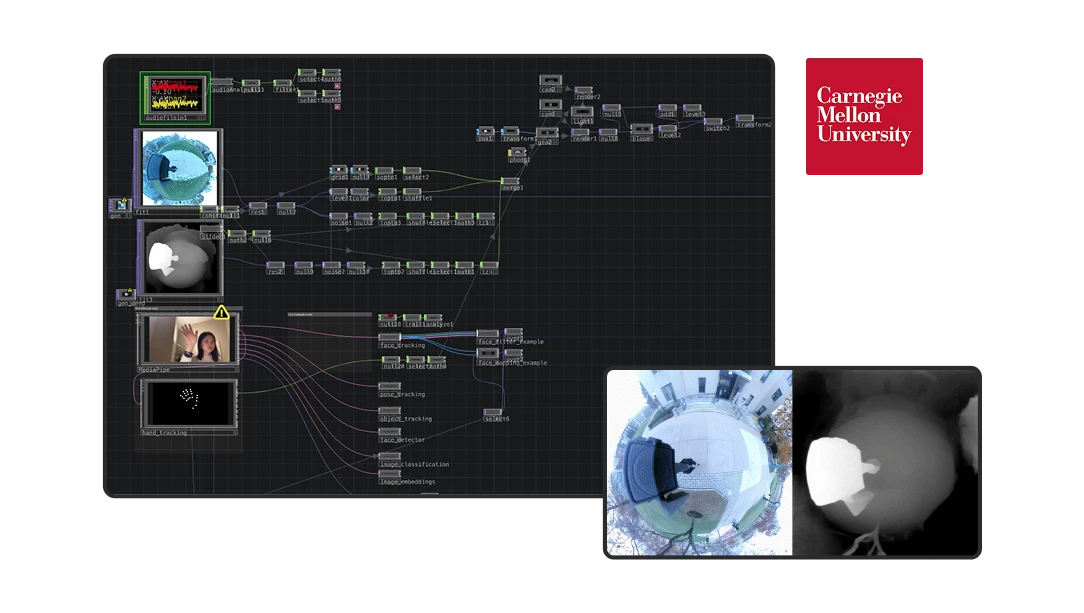
For her final project in the Experimental Capture course at Carnegie Mellon University (Fall 2024), student Kelly Wu created "Walk on the Earth." She filmed a bird's-eye video with a 360° camera on a selfie stick while walking around campus, and then turned it into an interactive piece in TouchDesigner where viewers can "touch" the Earth with hand tracking while the image moves to music. The project needed a depth map for every frame, so each pixel could move forward or back depending on its distance from the camera. Her first attempt with a stereo camera and OpenCV failed because of the heavy distortion at the edges of 360° footage, and the depth maps didn't line up with the color images. She switched to Artificial Studio's Image Depth Map tool, processed 3,000 frames at 24 fps, and rebuilt them into a depth video that matched the original footage. In her words, the AI model overcame the limits of traditional computer vision, and it even picked up the selfie stick close to the lens accurately.

Turning a walk across campus into an interactive 3D Earth — Carnegie Mellon University, 2024
04

What researchers use depth maps for

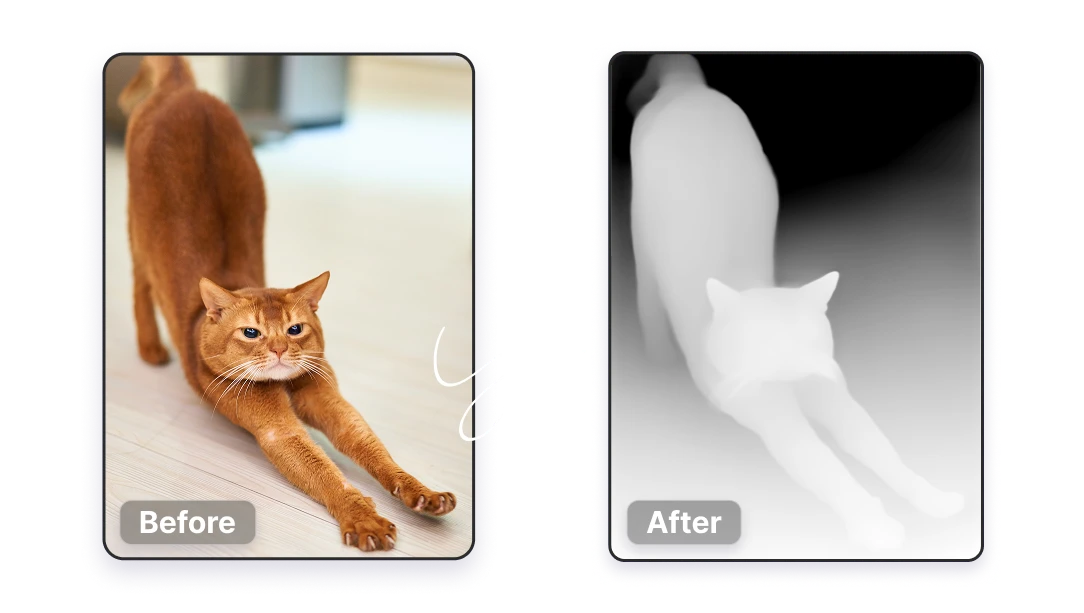
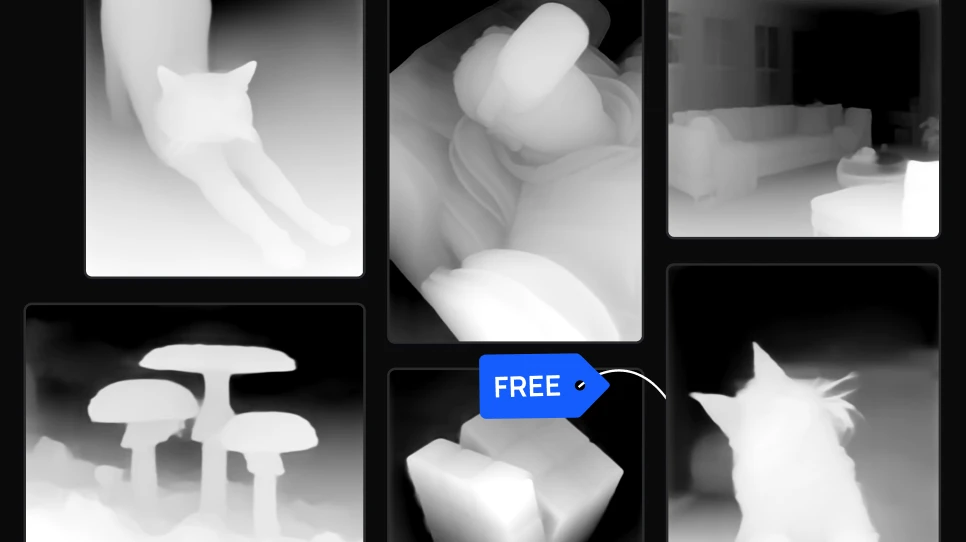
A depth map is a grayscale image where each pixel shows how far that part of the scene is from the camera. In research it's used to build holograms and focal stacks, to give 2D footage a 3D effect, to create parallax and AR experiences, and to prepare test scenes for computer vision and display experiments. Getting one used to require a stereo camera, a depth sensor or a 3D scan. Now it can be estimated from a single ordinary photo.

What researchers use depth maps for
05

Used Artificial Studio in your research?

If you've published a paper, thesis or course project that uses one of our tools, we'd love to hear about it and add it to this page. Write to us at hi@artificialstudio.ai with a link to your work.

Used Artificial Studio in your research?

Why researchers use Artificial Studio

Free tools, no setup

Many of our tools are free, including Image Depth Map, Background Remover and the Playground v2 image model. There's nothing to install, no GPU to configure and no model to download. That matters in research, where a depth map or a clean cutout is often a small step inside a much bigger project, and nobody wants to spend a week setting up a pipeline just for that.

Free tools, no setup

Works where traditional methods struggle

The CMU project is a good example. Stereo depth with OpenCV broke down on distorted 360° footage, while the AI depth model produced maps that lined up with the color images frame by frame. Because the depth is estimated from one image, you don't need a second camera or a special sensor, so you can use photos and videos you already have.

Works where traditional methods struggle

Over 60 tools in one account, with an API

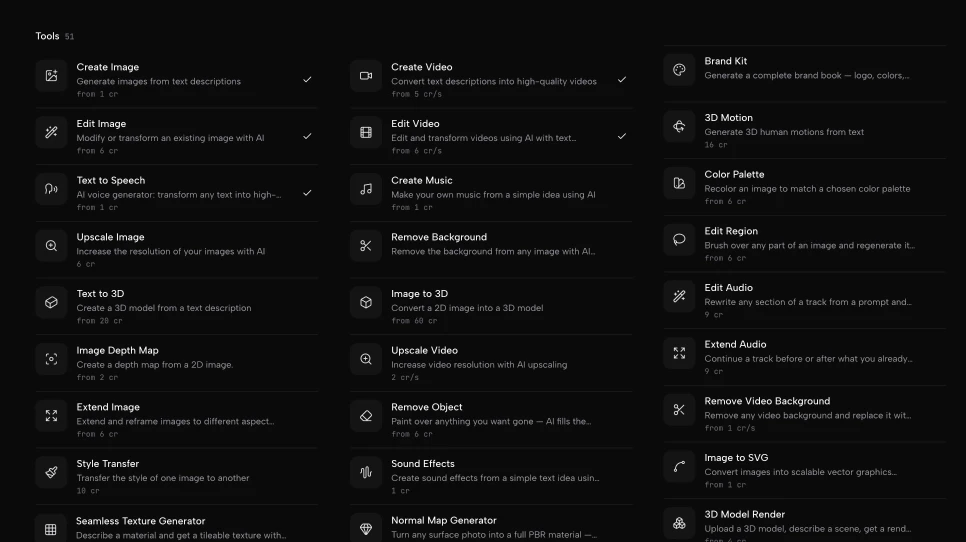
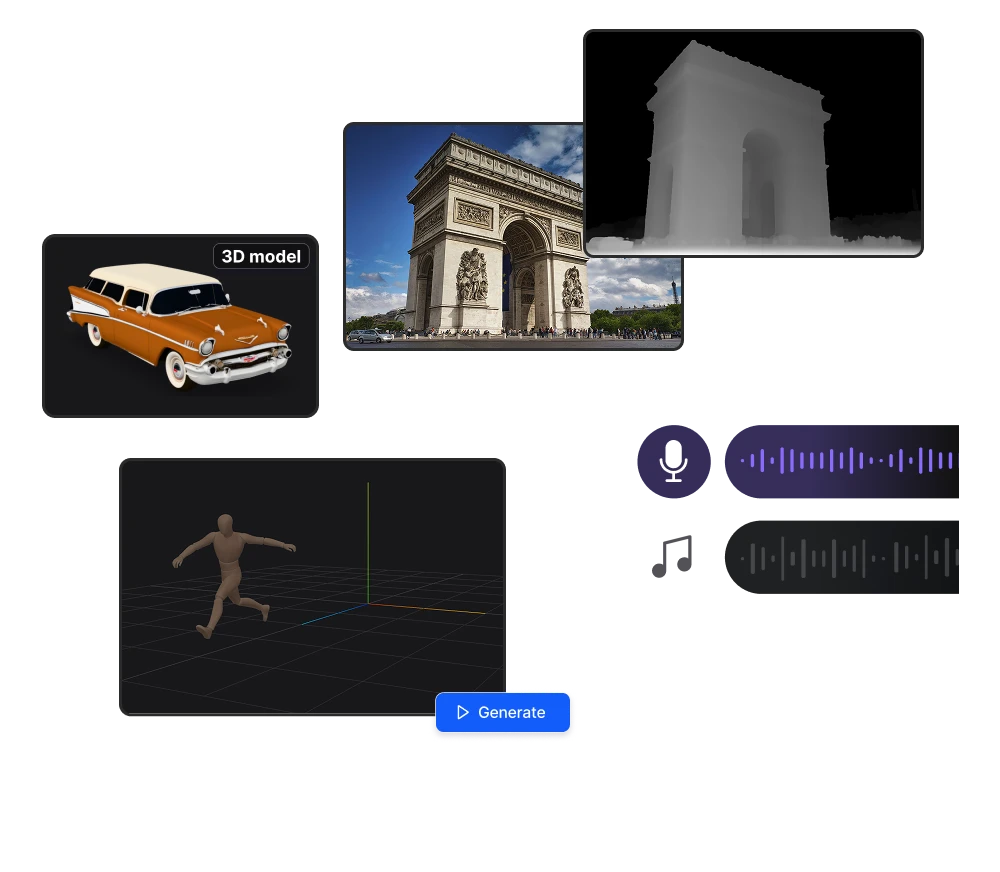
Beyond depth maps, the same account gives you tools that come up all the time in academic work: Whisper transcription for interviews and lectures, OCR that reads tables and formulas, stem separation for audio research, image-to-3D and text-to-3D models, and video translation for courses. When you need to process thousands of files, like the 3,000 frames in the CMU project, you can run them through the API instead of doing it by hand.

Over 60 tools in one account, with an API

FAQs

Yes. Researchers from Vrije Universiteit Brussel and imec cited Artificial Studio's Image Depth Map tool in "Computer-generated holography using the generalized Van Cittert–Zernike Schell propagator," published in Optics Letters in April 2026 (DOI: 10.1364/OL.595741).

Yes. Image Depth Map is free to use. You upload an image and download the depth map, with no subscription needed.

Yes. You can use the Video Depth Map tool for videos, or the API to process large batches of images, like the 3,000 frames Kelly Wu processed for her CMU project.

They're accurate enough for many uses, like holography focal stacks, 3D effects and visual experiments, as the projects on this page show. Since the depth is estimated from a single photo, it shows relative distance between parts of the scene rather than exact measurements in centimeters. If your work needs metric depth, use a depth sensor or a calibrated stereo setup.

Researchers and students often use Audio to Text and Audio to Subtitles for interviews and lectures, Text Extractor for pulling text, tables and formulas from scanned documents, Image to SVG for turning figures into vectors, Song Splitter for separating vocals and instruments, Image to 3D for teaching models and 3D printing and even Video Depth Map.

Use the tool name and URL, for example: ArtificialStudio, "Free image depth map," (2027). https://app.artificialstudio.ai/tools/image-depth-map-generator