Meshy 6 — Turn text prompt into a 3D Model
Describe the object you want in plain English and Meshy AI builds it for you: a clean, textured 3D model exported as a ready-to-use .glb file. Drop it straight into Blender, Unity, or Unreal — or use it as-is. Sculpting-level quality, generated in minutes, starting at about $1 per model.

What makes Meshy 6 different
What is Meshy 6?
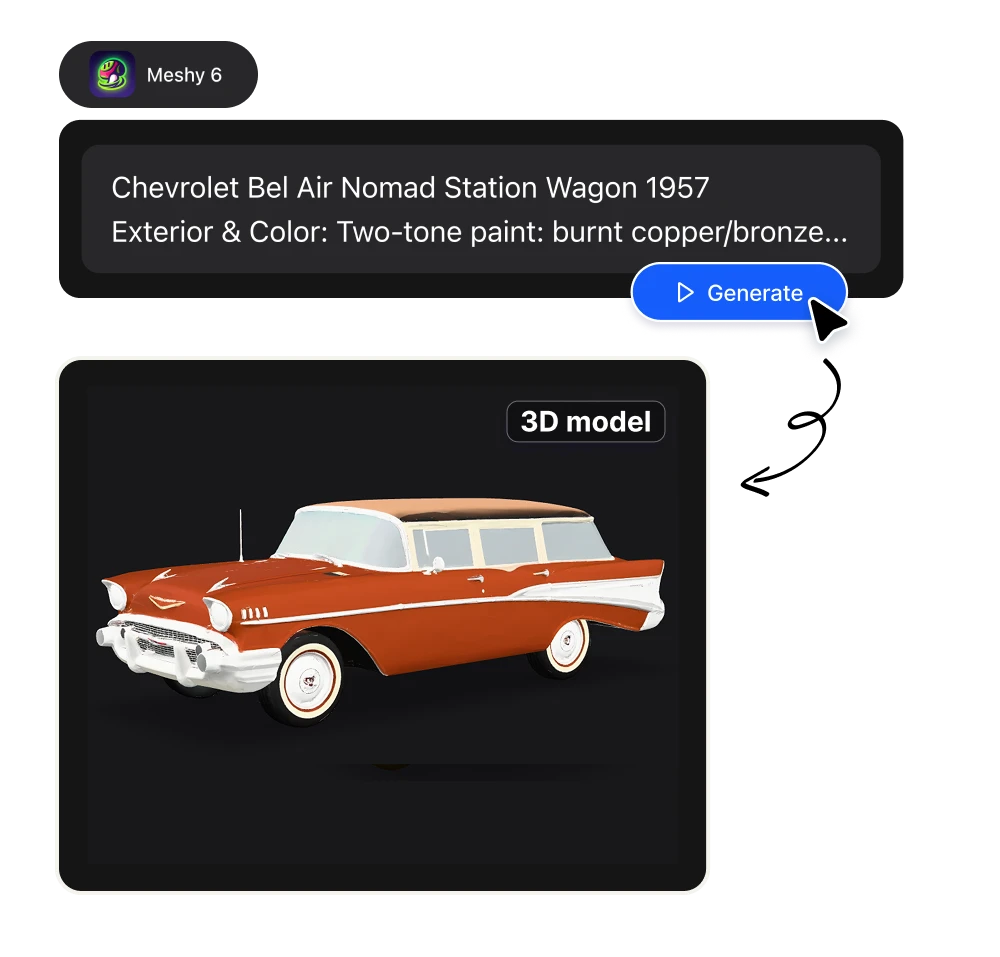
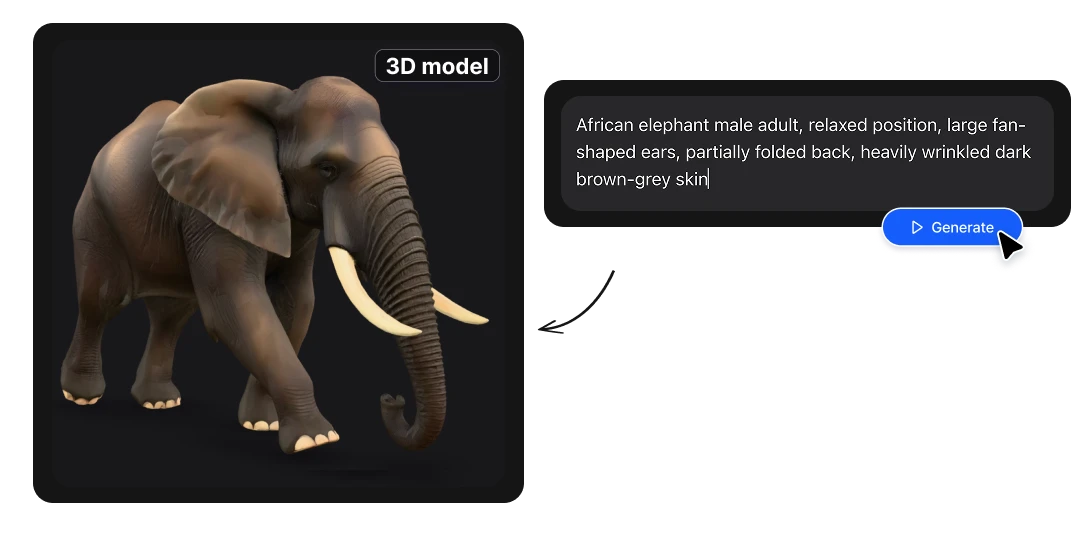
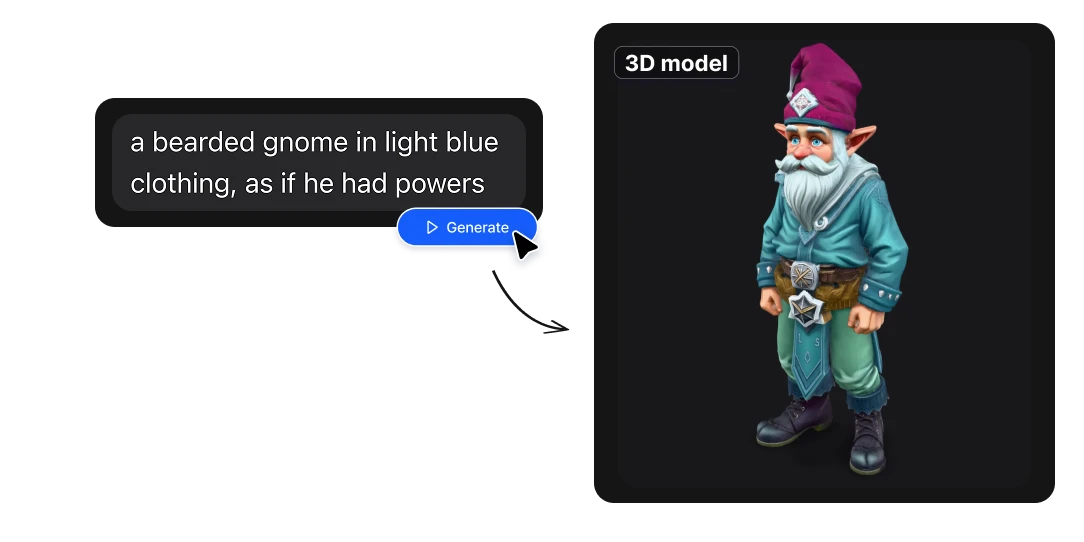
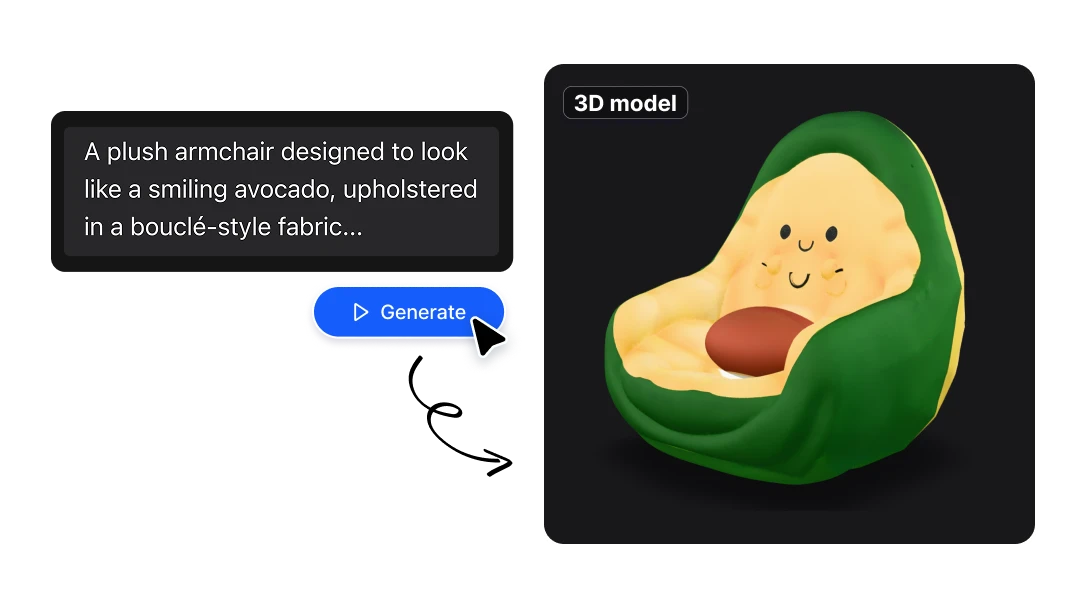
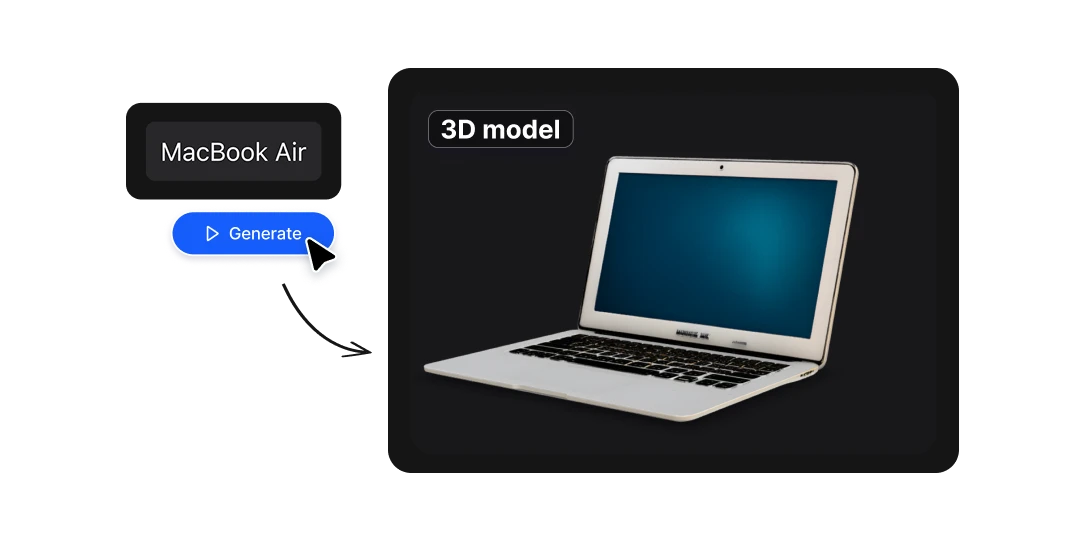
Meshy 6 is the latest version of Meshy AI, a text-to-3D model that turns written prompts into fully-formed 3D objects. On Artificial Studio, Meshy 6 powers our Text to 3D tool: you type a description, and the model generates a complete mesh with textures, exported as a .glb file compatible with virtually every major 3D application.
Meshy 6 is a significant step up from earlier versions. It produces smoother, more anatomically correct geometry for characters and organic shapes, sharper edges and cleaner silhouettes for hard-surface and mechanical designs, and includes a dedicated low-poly mode for real-time and game workflows. In short: less cleanup, more usable results, straight out of the prompt.
Built for the people who move fast
3D designers & artists — Skip the tedious blockout. Generate a base mesh from a prompt, then bring it into your DCC of choice to sculpt, retopo, and finish. Meshy 6 becomes the fastest first draft you've ever had.
3D & creative studios — Hit deadlines without ballooning your modeling hours. Concept faster, fill scenes quicker, and give clients something to react to on day one instead of week two.
Game developers & indie devs — Prototype levels and mechanics with placeholder-quality-plus assets, or ship low-poly models straight into your engine. Populate a world before you've hired a full art team.
Product & industrial designers — Visualize ideas in 3D the moment you have them. Generate variations of a form, present them, iterate — all before committing to a detailed CAD build.
Motion, AR/VR & web creators — GLB is the native language of real-time and the web. Generate assets that drop directly into your AR scenes, WebGL experiences, and motion projects.

What people build with it
Rapid prototyping — turn a concept into a spinnable 3D object in minutes
Scene population — generate props, set dressing, and background assets at volume
Game asset drafting — low-poly, engine-ready meshes for real-time worlds
Client concepting — show ideas in 3D before investing in full production
3D printing prep — start from a solid base mesh and refine for print
Base meshes for sculpting — a fast starting point for ZBrush/Blender detailing
AR/VR & web (three.js) — GLB assets ready for real-time and browser viewers

Generate 3D objects fast, cheap, and ready to use

Low-poly mode for real-time and games
Need assets that run fast in a game engine? Meshy 6's low-poly mode produces efficient meshes optimized for real-time performance, so you can populate scenes and prototype gameplay without spending hours on retopology.

Minutes, not hours
Blocking out a 3D asset by hand can eat an afternoon before you've even started detailing. Meshy 6 gives you a complete, textured base mesh in minutes — turning your idea into something you can actually look at, spin around, and iterate on almost immediately.

Genuinely affordable
On Artificial Studio, a Meshy 6 model costs 160 credits — and 1,300 credits are just $9. That's roughly $1.10 per 3D model. Prefer to stretch your budget even further? You can switch the same Text to 3D tool to lighter engines like Hunyuan 3D v3 for about $0.52 per model, with quality that holds up beautifully for most jobs.
From prompt to polished 3D asset in three steps
Describe it.
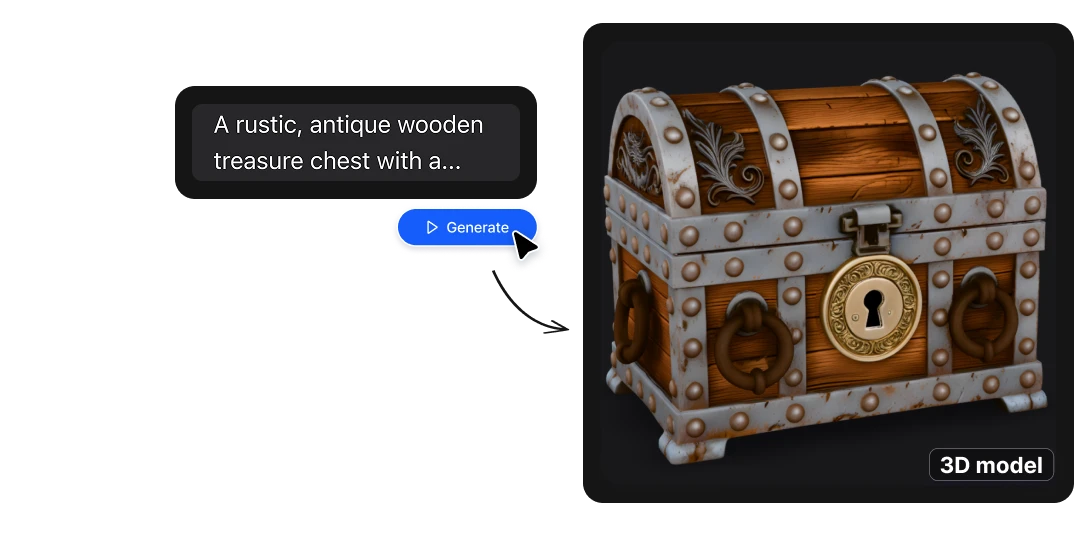
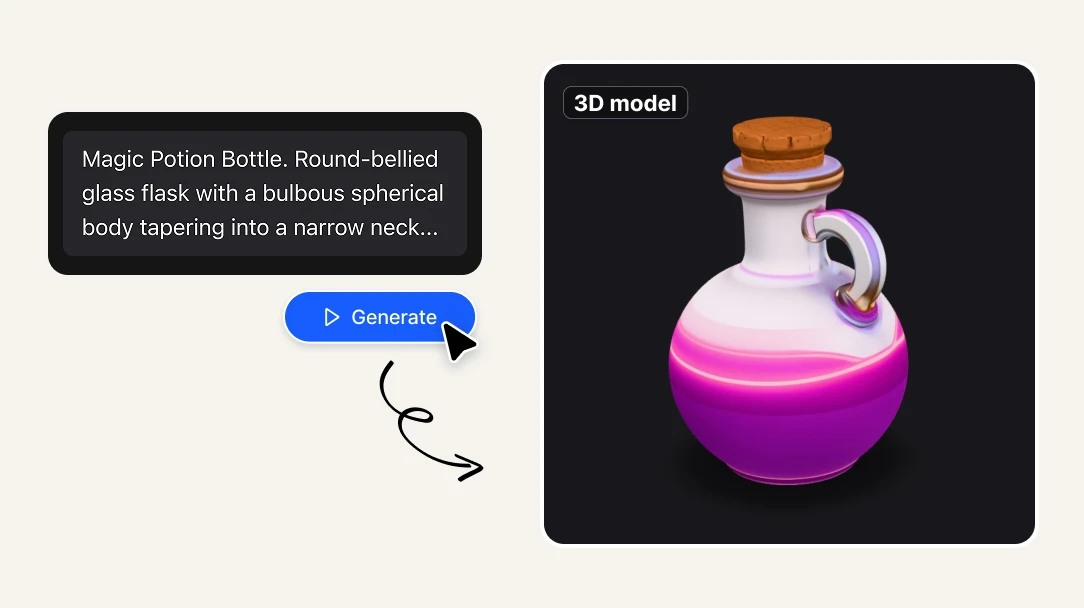
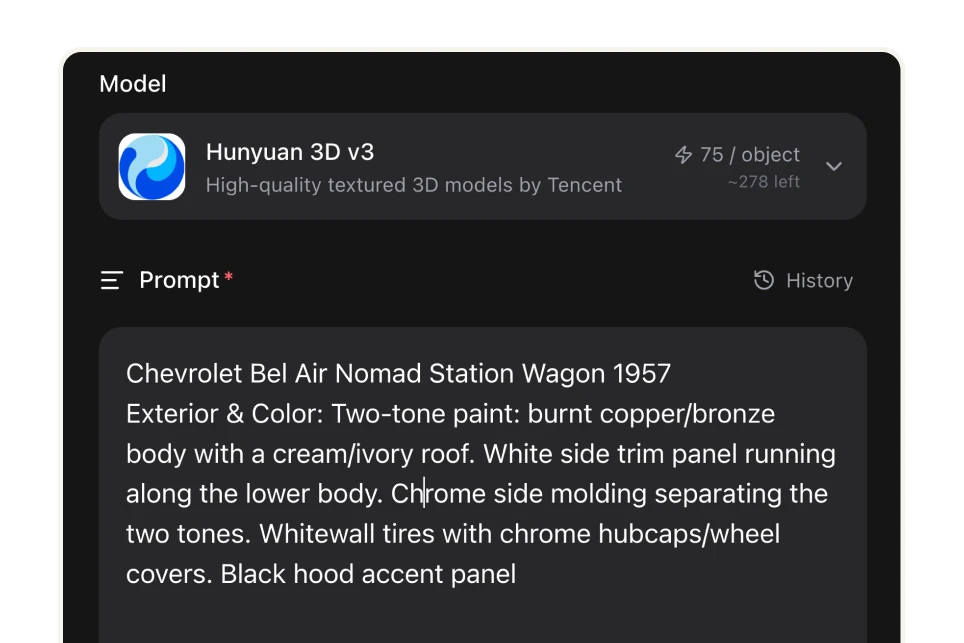
Write what you want — "a weathered medieval treasure chest with iron bands," "a low-poly sci-fi hover bike," "a ceramic coffee mug with a rounded handle." The more specific your prompt, the closer the result.

Generate it.
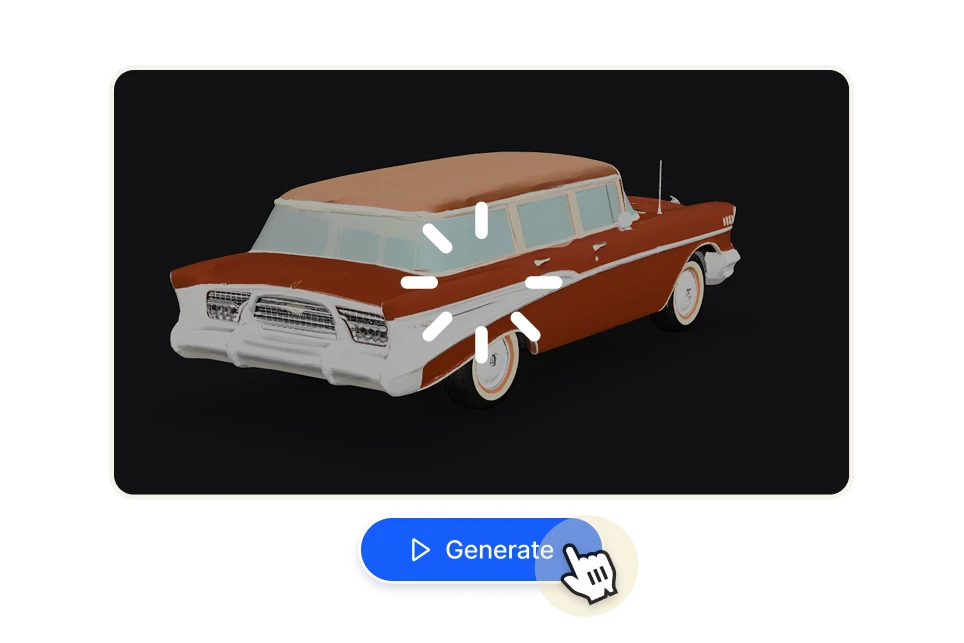
Meshy 6 builds the geometry and textures for you in minutes and delivers a standard .glb file. No retopology software, no sculpting, no waiting on a render farm.

Use it or refine it.
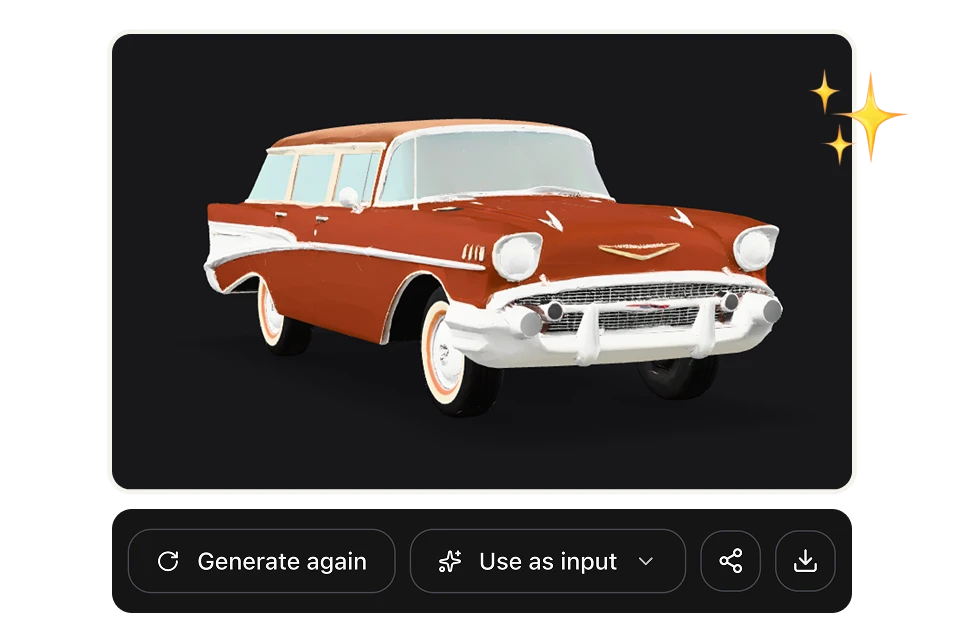
Use the model as-is for prototypes, previews, and real-time scenes — or open the GLB in Blender, ZBrush, Unity, or Unreal and polish it to final quality. Meshy 6 handles the heavy 0-to-80% so you spend your time on the last 20% that matters.

FAQs
What is Meshy 6? Meshy 6 is the newest version of Meshy AI, a text-to-3D generator that turns written prompts into complete 3D models. It improves on earlier versions with smoother organic geometry, sharper hard-surface detail, and a low-poly mode for games. On Artificial Studio it powers the Text to 3D tool and exports models as GLB files.
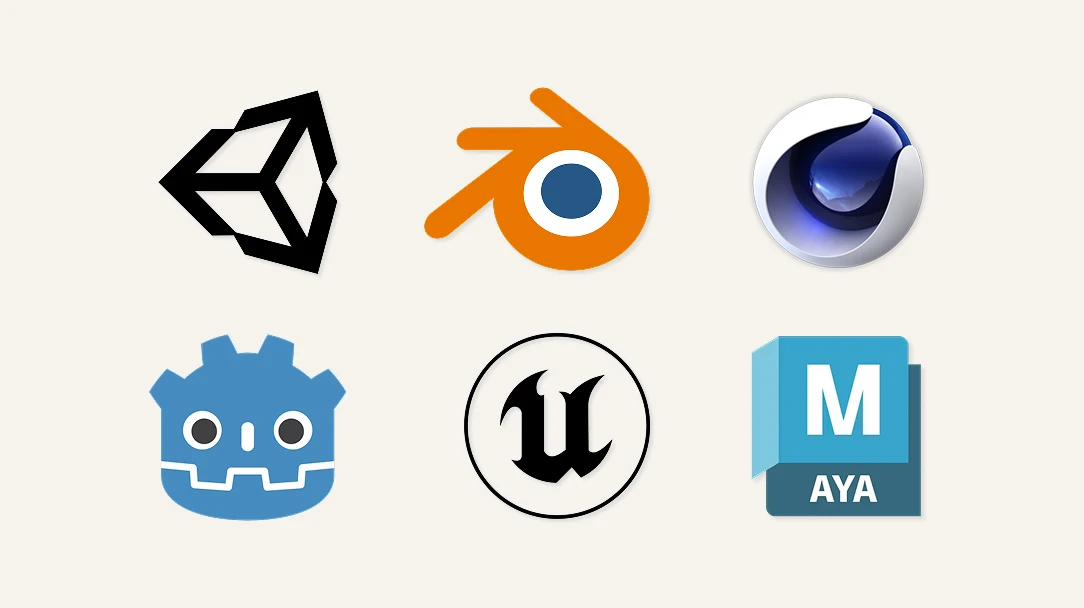
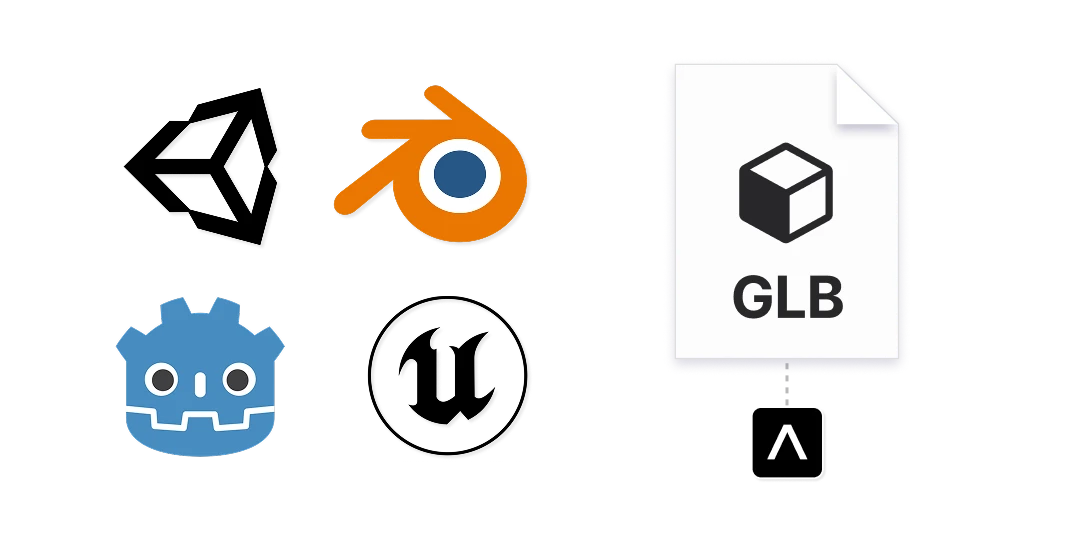
What file format does Meshy 6 export? Meshy 6 on Artificial Studio outputs .glb (glTF binary) — a universal 3D format with geometry and textures in a single file. GLB imports directly into Blender, Unity, Unreal Engine, Godot, and web viewers, with no conversion needed.
Can I use Meshy 6 models in Blender? Yes. GLB is natively supported by Blender (File → Import → glTF 2.0). Generate a model from a prompt, download the GLB, and open it in Blender to sculpt, retopologize, re-texture, or finish it however you like.
How much does Meshy 6 cost? On Artificial Studio, each Meshy 6 model costs 160 credits, and 1,300 credits cost $9 — about $1.10 per model. You can lower the cost further by switching the Text to 3D tool to a lighter engine like Hunyuan 3D v3 (about $0.52 per model).
Is Meshy 6 good enough for professional work? Meshy 6 is best used as a high-quality starting point. It gets you 80% of the way to a finished asset — clean base geometry and textures — which you can use directly for prototypes, previews, and real-time scenes, or refine in Blender/ZBrush for final production quality. It's designed to accelerate a professional workflow, not replace your judgment.
Do I need 3D modeling experience to use it? No. If you can describe an object in a sentence, you can generate it. The 3D expertise only becomes useful later, if and when you choose to refine the model in dedicated software.
What can I make with Meshy 6? Props, characters, creatures, vehicles, furniture, product concepts, game assets, environment pieces, and more — anything you can describe clearly in a prompt.