Your taste won't save you from AI. How to think like a strategist.
AI is taking over design output, and taste alone won't protect you. Learn the three questions that turn designers into the consultants clients pay for.
If you've spent any time in design circles this year, you've probably heard some version of the same reassurance: "AI can execute, but it can't replace taste". Execution is getting cheap, so designers need to move upstream and get hired for their thinking, and taste is what will carry us there.
It's a comforting idea, and parts of it are true. But altought taste is useful, it's passive. What keeps a designer valuable is what they do with it:
- The questions they ask before they open a file
- The reasoning they bring into the room
- The nerve to defend a direction before the client is convinced.
The work most exposed right now is pure output. Canva's AI features and similar tools are taking over the jobs that used to be a steady income for a lot of designers: a logo for a local business, a set of social tiles, a banner for a sale.
Small business clients are price-sensitive, and when a tool gives them something "good enough" in a few minutes for a few dollars, many of them will take it. If your offer is mainly "I'll make the graphic," you're competing directly with that.
Designers with deep craft or niche expertise are in a safer spot. We looked at this from the marketing side in Everything that scales is now worth less: when anything that can be mass-produced gets cheaper, the things that don't scale, like specialist knowledge, judgment and trust, become more valuable. The same applies to design:
Producing graphics scales very well now. Understanding a client's business does not.
This isn't the first time the industry has felt this way: Fiverr was going to destroy design around 2010, then Canva was, then social media, and now AI. Each one did change the industry. Skills lost value and some business models disappeared.
Each time, designers went looking for a safe patch of ground that technology couldn't reach. Right now that patch is taste.
Believing that the thing that will save us is something we already have is very... convenient. If taste is the answer, we don't need to change much.
The problem is that taste, on its own, doesn't do anything. Plenty of people have always known what looks good and what doesn't, and never made anything of it. We all know someone who says "I had that idea ages ago" every time something new comes out. Maybe they did, but they didn't act on it, so it doesn't count for much.
The advantage isn't having taste, it's having the conviction to bet on it before anyone else agrees.
Designer James Martin illustrates this idea with the following example: David Bailey in 1962. Bailey was a young photographer, still on probation at Vogue, sent to New York in a freezing January for a shoot that the fashion editor had already planned down to the models and locations. He ignored most of it. He insisted on bringing Jean Shrimpton, who wasn't the model Vogue had in mind, ignored how he was told to dress and how the photos should look, and shot her his own way. Looking back, he said:
"I didn't think Vogue would like what Jean and I were doing… I didn't care. I just did what I did. But it worked."
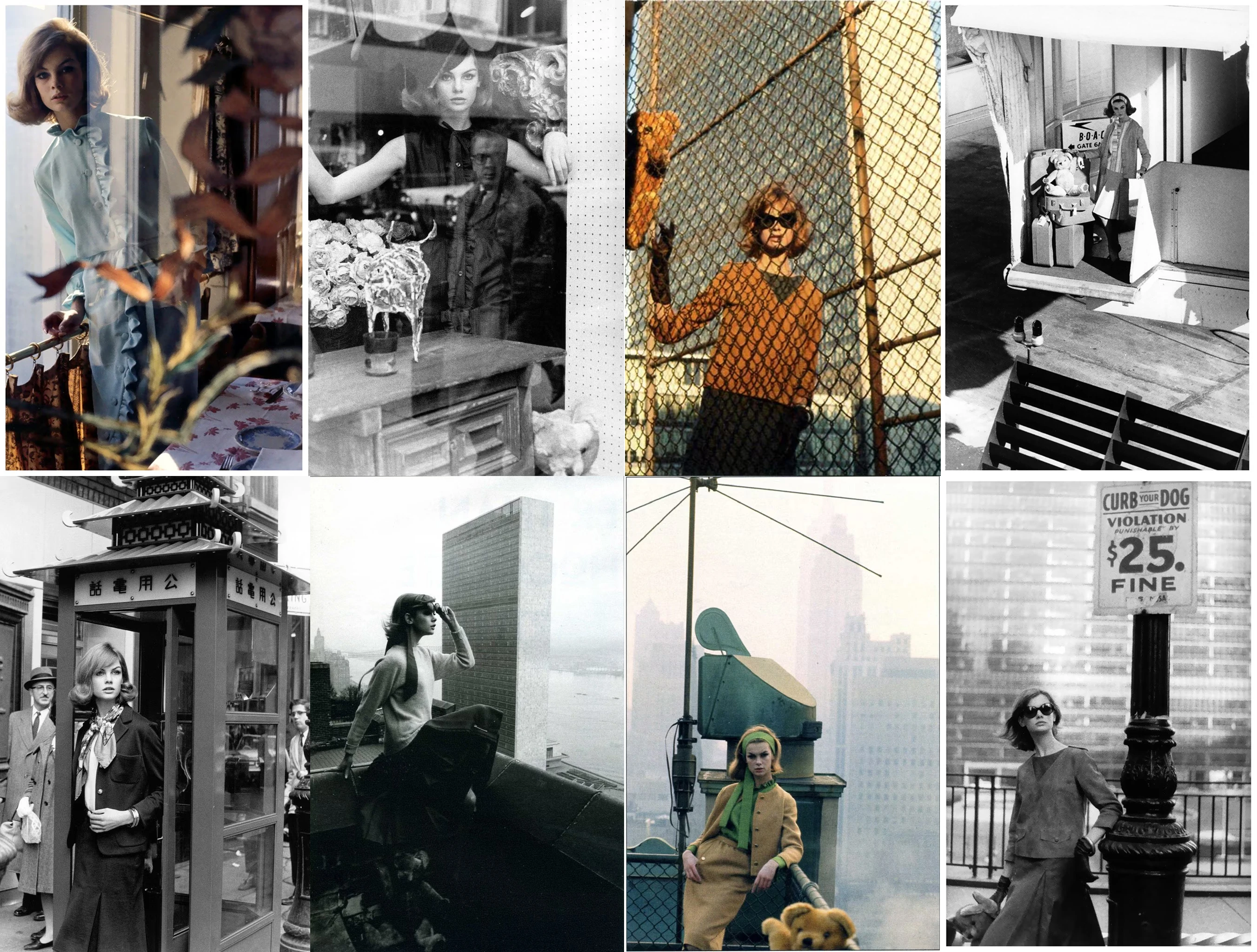
The "Young Idea Goes West" photo shoot that David Bailey did with Jean Shrimpton in New York in January 1962, published in British Vogue.
Those photos helped define the look of the 1960s and pushed fashion photography away from the stiff style it had before. It's easy to say Bailey could get away with it because he was Bailey, but he wasn't famous yet. He was risking the job. He bet on his judgment before anyone agreed he was right.
So taste matters, but only when it comes with conviction. And conviction in client work doesn't come from personality alone. It comes from understanding the problem well enough to defend your choices, which is where the talk comes in.
Subscribe to get deep dives on tech and the future of creative work.
Move from producer to consultant
The main idea of the talk was simple to say and harder to practice: stop solving design problems 🎨 and start solving business problems 💡
A producer takes the order. A brand builder works as a partner. The difference shows up in the first conversation. When a client says "I need a logo" a producer quotes for a logo. A partner asks what they're actually trying to achieve.
- Did they lose market share?
- Did a competitor just rebrand?
- Is there a trade show in two months and the booth looks dated?
Each of those answers leads to a different project, and sometimes the right solution isn't a logo at all. You diagnose first, then propose, and what you propose can go well beyond the original brief.
Language matters here too. Most of the world thinks "brand" means the visual part only, so if you talk to a CEO or a CMO about kerning and color systems, you're positioning yourself as the person who makes things look nice. Talk about positioning, customers and competitors instead.
Depending on who you work with, a title like "creative strategist", "creative consultant" or even "fractional CMO" may land better than "designer," because it tells the client you're there to think about the business with them.
A consultant diagnoses the problem and recommends a direction, and doesn't always have to execute it. That's a different kind of value than delivering files, and you can charge for it differently.
Three questions that make the client sell themselves
Moving upstream is easier when you have a few questions ready instead of starting with your portfolio or your process. The talk recommended two frameworks.
The first comes from Jonathan Stark and is meant to qualify an opportunity quickly:
- Why this? What are we trying to do?
- Why now? How urgent is it, and what happens if it waits?
- Why me? Why not use AI, a cheaper studio, or a cousin who knows Photoshop?
The third question is interesting. Asking a client why they can't just use an AI tool or a cheaper option sounds risky, but it works the other way. To answer it, they have to explain what they need that the cheap option can't give them, and in doing so they make the case for hiring you. You aren't pitching yourself, they are.

The second framework comes from Michael Bungay Stanier's The Coaching Habit. It's built on three questions:
- What's on your mind?
- And what else?
- What's the real challenge here for you?
"And what else?" is the most useful in a discovery call. Clients usually start with the safe, obvious answer. Asking once or twice gets you past it to what's actually worrying them. The last question cuts through the noise and helps both of you agree on what the project is really about.
These questions are usually enough to uncover the core project, how urgent it is and why the client came to you specifically, and they let the client do most of the selling.
Strategy is what lets you push back
Having conviction is much easier when you have reasons.
Pushing back on a client without a clear brief agreed upfront is almost impossible. Without strategy, every decision becomes your opinion against theirs, and the client usually wins because they're paying. That's how projects end up with dozens of revision rounds and a designer who's taking orders instead of leading.
With a strategy in place, the question in every review changes from "do you like it?" to "does this fit where we're going?" When a client says "I like this other color", you can explain the reasoning behind your choice: what competitors are using, what the color communicates, and how it supports the positioning you agreed on together.
Once the reasoning is on the table, the conversation stops being personal. You're both looking at the same goal and checking the work against it. That's what conviction looks like in day-to-day client work.
Being stubborn isn't enough. You need to understand the problem well enough to bet on a direction and explain why.
None of this means avoiding AI. It means using it for what it's good at, so your time goes to the part clients can't get from a tool.
In Artificial Studio, for example, you can use the Brand Kit tool to put together a few rough directions before a discovery call, or generate quick mockups to test an idea with a client before committing to it. With Concepts you can save a character, product or visual style from four reference images and reuse it across every asset, which keeps a campaign consistent without rebuilding it each time.
The production gets faster, and you get more time to ask better questions and defend the work.
Producing the work no longer sets designers apart, so the thinking, the questions and the willingness to bet on a direction are what clients will pay for.
Try it yourself
Start creating with the tools mentioned in this article.