What earns attention now, according to four marketing leaders
Four marketing leaders at the MarTech Conference on what earns attention in 2026: why volume backfires, and where trust actually gets built.

The 1980s and 90s ran on brand loyalty. You bought Coca-Cola because you bought Coca-Cola 🥤. Toyota because your family bought Toyota. The brand itself was the proof.
The 2000s and 2010s ran on social proof. Loyalty fractured and validation moved sideways: to influencers, peer posts, reviews from strangers who felt more credible than any ad.
Now it runs through AI. Before people ask a friend or check reviews, they ask ChatGPT, Claude or Gemini whether your brand is any good.
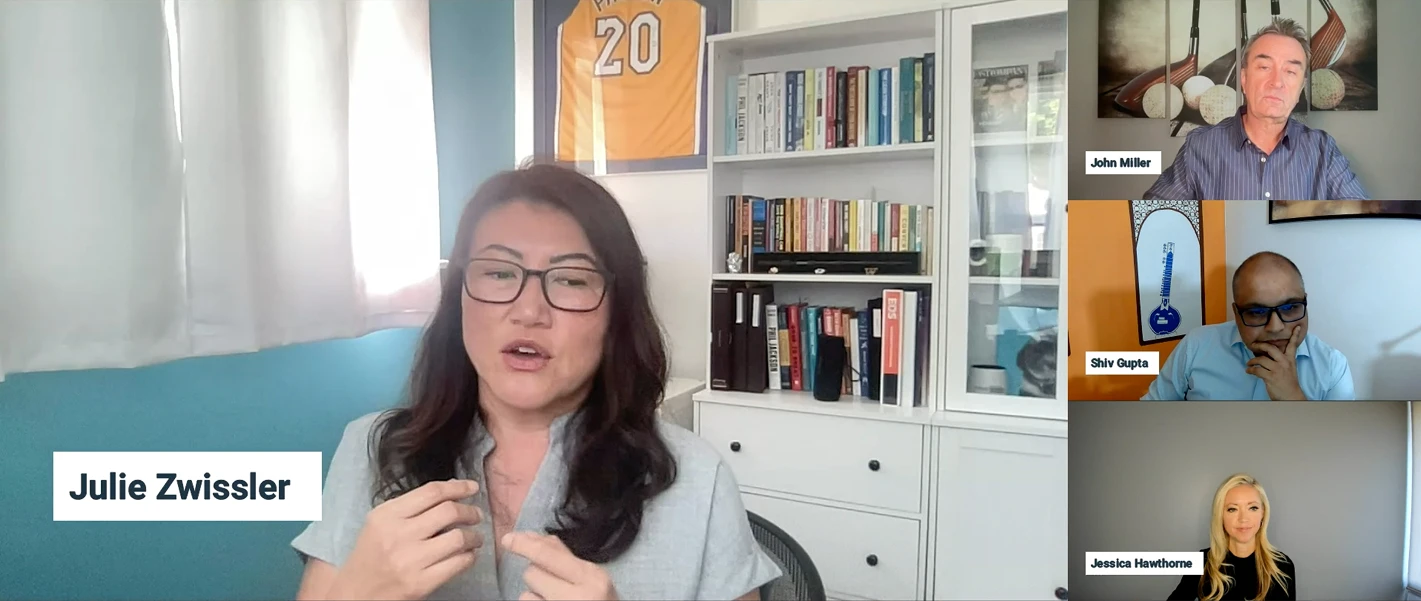
That's what they were discussing in an interesting MarTech session called "The engagement illusion: What actually gets attention (and what gets ignored)"
- In the first era you controlled the message.
- In the second you could at least influence the people carrying it.
- In the third, a model you have no relationship with summarizes your brand for a customer you'll never see, based on sources you didn't write.
Your reputation now lives in third-party places.
The panel was direct about this:
"Demonstrating expertise only counts if that expertise shows up somewhere other than your own website."
Publishing it on your blog is table stakes; it registers in AI search when other people are the ones saying it.
There's also a scaling rule: the bigger the purchase, the higher the bar for those credibility signals. Somebody buying a $30 tool takes your word for it, but somebody buying a $30,000 engagement wants to find you in five places you don't own 🔍
The volume trap
In a survey of 600 marketers cited on stage, 42% believed that publishing more content improves your visibility in AI search. But it doesn't.
What AI search rewards is a brand impression assembled from across the internet, not raw traffic to your domain. More content in your own house doesn't build that.
But the volume reflex is understandable, and it's the same one that produced the current mess. The panel used the phrase "AI slop" for what's flooding every channel right now: content that isn't wrong or offensive, and isn't distinguishable from anyone else's.
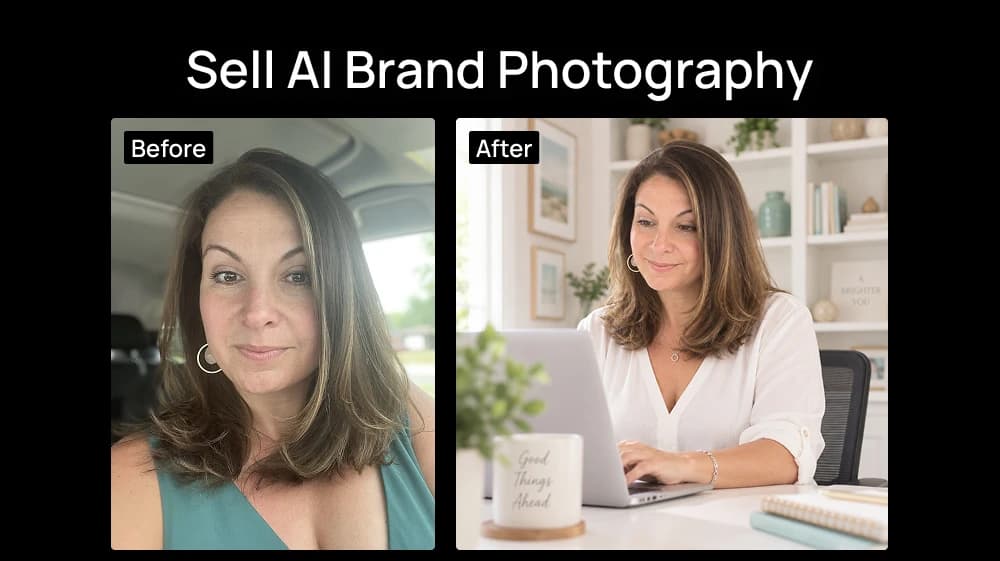
Competing brands are now shipping documents with identical layouts, because they all asked ChatGPT to make the PDF. Same structure, headings and visual rhythm. Not copied from each other, but generated from the same defaults.
For most of marketing history, looking like your competitor required effort or incompetence. Now it's what happens when two teams use the same tool correctly. A strange new problem.
Most of the AI-sameness conversation is about writing, like the em-dashes or the usual "it's not X, it's Y". Another problem is the visuals: layouts, color choices, the stock-photo-adjacent imagery and the template structures are converging just as fast.
Subscribe to get deep dives on tech and the future of creative work.
The panel's answer was that trust becomes the primary differentiator, and that unique, authentic experiences are what separate brands.
If your production process starts from a blank prompt and accepts whatever comes back, you'll converge with everyone else who did the same. If it starts from your own visual system (your palette, type, references, your existing work) you get output that belongs to you.
In our platform Artificial Studio we have video, image, audio, music and 3D generation where you can feed the model your own references and brand assets instead of accepting the house style of whatever model you happened to open.
Where the panel thinks this goes
Three predictions from the session:
SEO keeps declining and GEO takes over, particularly for service businesses.
Websites increasingly get visited by bots, not people. They raised this without resolving it, if most of your traffic is machines reading on behalf of humans, what is the site actually for? Nobody has a good answer yet 🤷♂️
Human and in-person experiences gain value as digital gets noisier 👥. Gen Z and Gen Alpha are trending back toward malls, movie theaters and live events. Lunch-and-learns, trade shows and small VIP events build deeper vertical trust than any nurture stream.

Alongside that, localization keeps strengthening as the internet niches down 📍. Shiv Gupta's image for it was Manhattan: you're surrounded by millions of people, but you actually live on the same block as a few dozen. The internet is turning into that.
What I took away
The lesson wasn't "publish less", it was that the ratio changed.
Producing content is now nearly free, which means it's worth nearly nothing on its own. What costs something is what carries the weight. Like:
- A point of view
- A body of work other people cite
- A product that matches its promise
- A look that's actually yours
Everyone gets to publish now and almost nobody sounds like anyone in particular. That is the gap you can fill.
Source: "The engagement illusion: What actually gets attention (and what gets ignored)," MarTech Conference, September 2, 2026. Four panelists: Jessica Hawthorne-Castro, CEO of Hawthorne Advertising. Shiv Gupta, Chief Solutions and Analytics Officer at Volute Group. John Miller, President of Scribewise. Julie Zwissler, Global CMO of Office Beacon.
Try it yourself
Start creating with the tools mentioned in this article.