How to sell AI brand photography as a service
One agency charges $3,200 for brand photo shoots that used to cost $30,000. How to build, price and sell the service your clients already need.
Every web designer have this problem: the site is built, the copy is approved, and the project has been sitting for six weeks because the client still hasn't sent photos. They keep saying they'll book a photographer, but they never do, and your invoice waits.
That bottleneck stopped being a problem a while ago.
A designer who put a price on it
Diane Whiddon 👩🏻 has been building websites since 2006. She's a brand strategist by instinct and a designer by trade, and on Jonathan Stark's podcast Ditching Hourly she told the story of how she got into this.
A couple of years ago she saw a site for an influencer that had clearly cost a fortune: styled photos in every section, props, custom illustrated graphics, the whole thing shot over days. She put the number around 30,000 dollars between the photographer, the production and the PR team that packaged it.
Her reaction wasn't that it looked expensive. It was that she could deliver the same thing from twenty selfies and a brand style guide, in about a week.
Today she sells two packages:
- The first is a headshot set, which goes out as an add-on with every site she builds and, in her words:
"Sells like hotcakes now that clients understand what an AI headshot is"
- The second is a full brand shoot at around $3,200
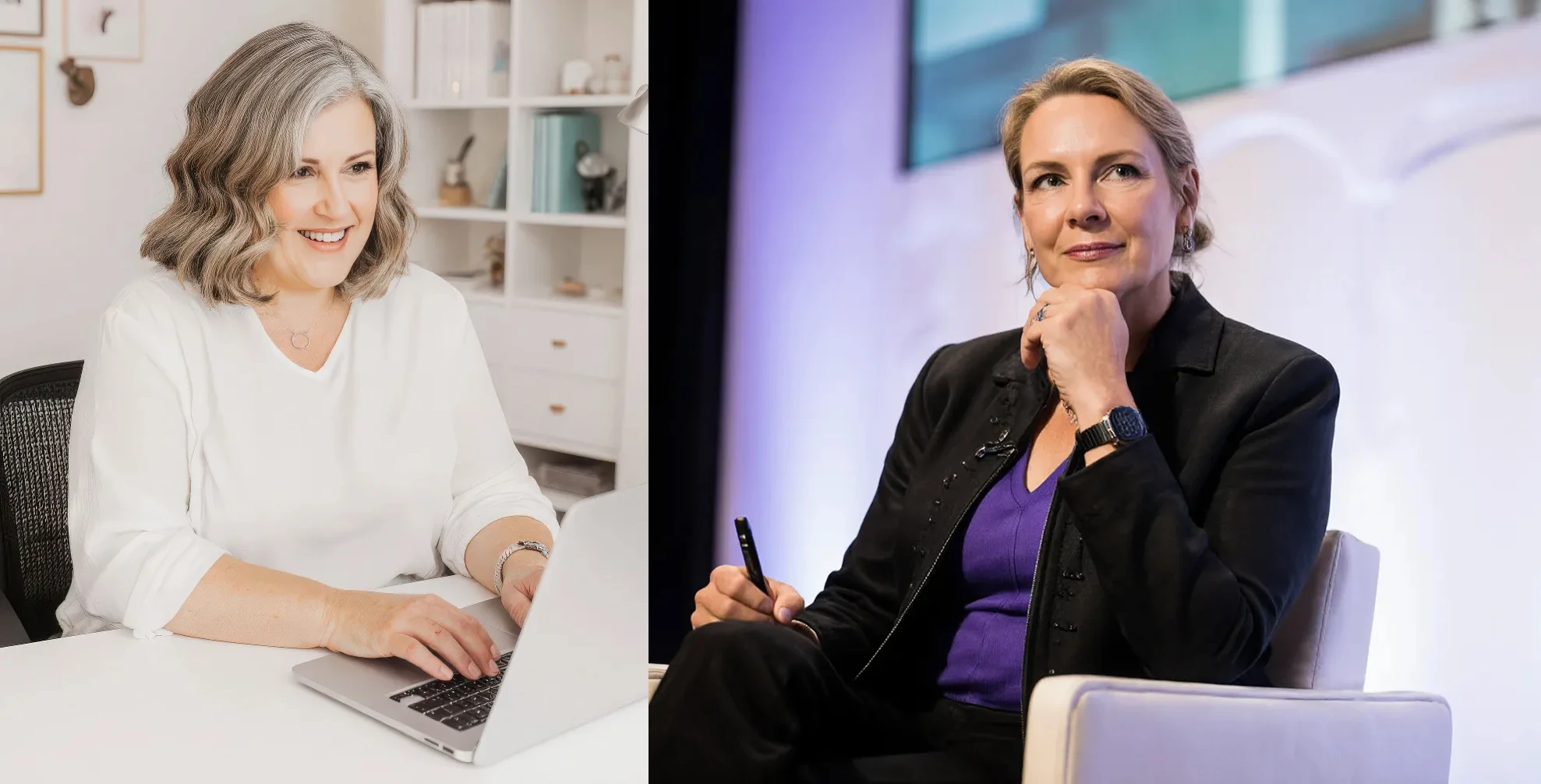
This is the kind of output Diane Whiddon generates with AI:
Why so few people are selling this
Your client has no idea this is a category. They've never had a producer walk in and quote them a thirty-thousand-dollar shoot, so they have no reference price and no vocabulary for it.
Diane's own experience is that the most common reaction is confusion: "what do you mean, custom stock images?" That's not a rejection, it's a market that hasn't been educated yet, which is the best possible moment to be the one educating it.
So lead with the problem they already feel:
- They know their site looks thin
- Their LinkedIn posts have no visuals
- The last headshot they have is from 2019.
Sell against that, not against a photographer 📸
The mistake that can cost you money
When Diane first got into this, the course she took was selling the fantasy version. You can make your client a mermaid 🧜♀️, a forest nymph, or an astronaut.
She rebranded her own site that way. Pink hair, pin-up space girl, a robot, mid-century modern stars floating across the page. It looked incredible. Her sales dropped 📉
So she went back to clients she trusted and offered them free shoots to build a portfolio. Every single one asked for the same thing: put me in front of an audience, or give me photos of me speaking to a room.
💡 People don't want imagination. They want status. The consultant who's working toward a keynote wants to look like someone who already gives keynotes. The agency founder wants to look like a studio with thirty people.
Asi es como su website Sway Rise Creative explica el servicio:
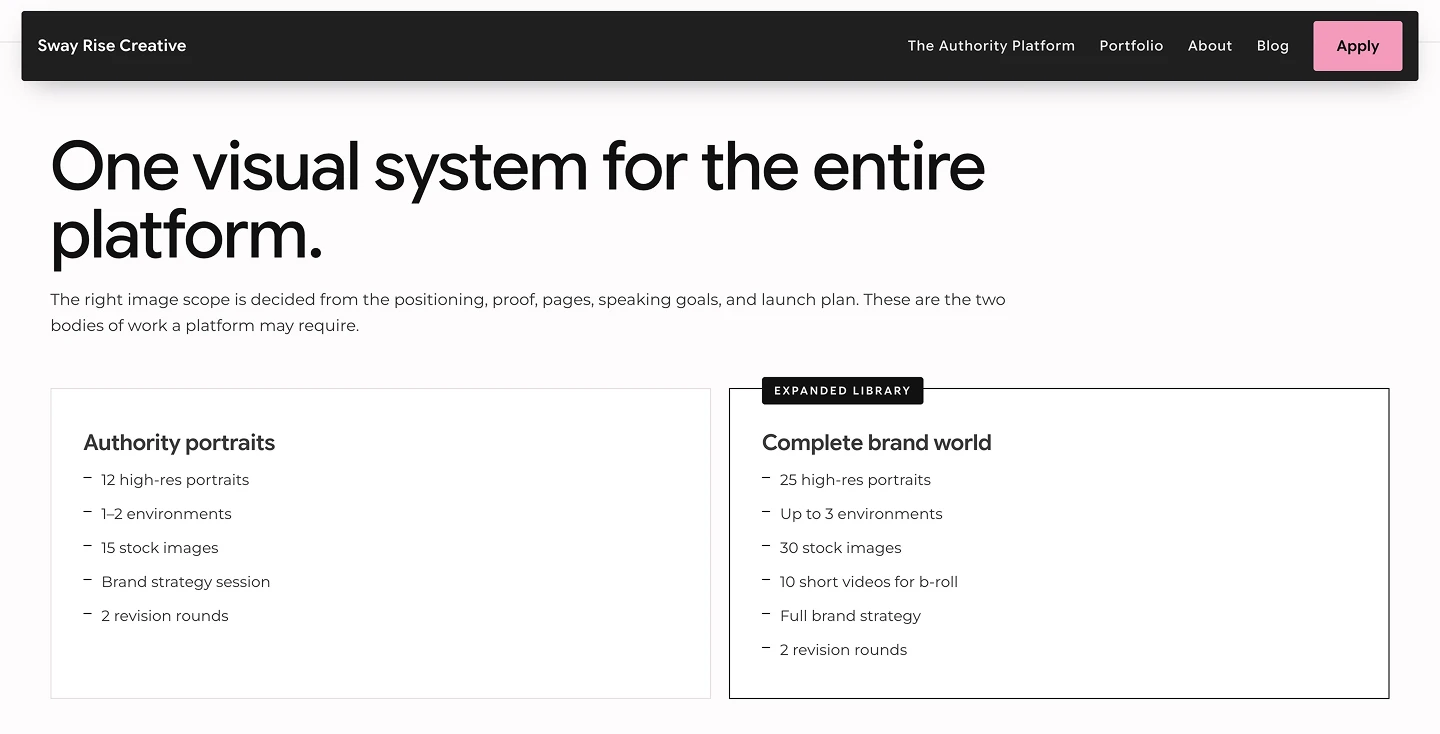
This is also why the work is worth three thousand dollars instead of thirty. Anyone can type a prompt. Very few people can decide what the shoot should contain in the first place: what transformation the client sells, what point A looks like, what point B looks like, and which fifteen images carry a viewer from one to the other. That's brand work.
The same applies to the output itself. Generated portraits fail in a specific way, which is skin that reads as plastic. It's too even, clean, no pores or texture. If you prompt for skin texture, for pores, for fine lines, and you edit and upscale properly afterward, the difference between a usable image and an obvious one is enormous. Your eye as a designer is the entire product.
Subscribe to get deep dives on tech and the future of creative work.
Where you draw the line
Diane has her policy written on her sales page, and it's a smart commercial move rather than only an ethical one. She'll only create images of things the client has actually done.
If someone has spoken at the UN and nobody in the room took a decent photo, she'll build that image . If they've never been on a stage, she won't put them on one. No fabricated conference logos, no invented venues.
State this out loud in your proposal. It sounds like a restriction and it functions as permission. The client who was hesitating because the whole thing felt like cheating now has a rule they can point to when someone asks.
How to package it
Start with the add-on. Every website project you deliver includes a headshot set. It's the easiest thing in the world to sell because the client already understands what a headshot is and already knows they don't have a good one. It also removes the stall that was blocking your own project.
Then build the full brand shoot as its own offer. Fifteen to thirty images covering the range the client actually needs: working, presenting, close portraits, environment shots, detail shots of their space and objects. Price it against the production it replaces, not against the hours it costs you.
Then look at retainer. Anyone publishing weekly runs out of visuals within a month, and a quarterly refresh is an easier sell than a new project every time.
The workflow underneath is straightforward once you've done it twice. You start with a brand conversation and a shot list. You build a reference set that establishes the look, then generate the client's images against those references so everything matches across the suite. You edit, retouch and upscale.
The workflow underneath is straightforward once you've done it twice. You start with a brand conversation and a shot list.
Then you build the client's look once and reuse it across the whole set, which is where Concepts in Artificial Studio does the heavy lifting: reusable reference sets you apply to every generation. A character concept holds the client's likeness so they look like themselves in all fifteen images.
A style concept holds the aesthetic (lighting, palette, treatment) so the suite hangs together instead of looking like fifteen separate attempts.
An object concept holds their product if the shoot includes one. Build them once per client, keep them on file, and the quarterly refresh becomes a half-hour job instead of starting over.
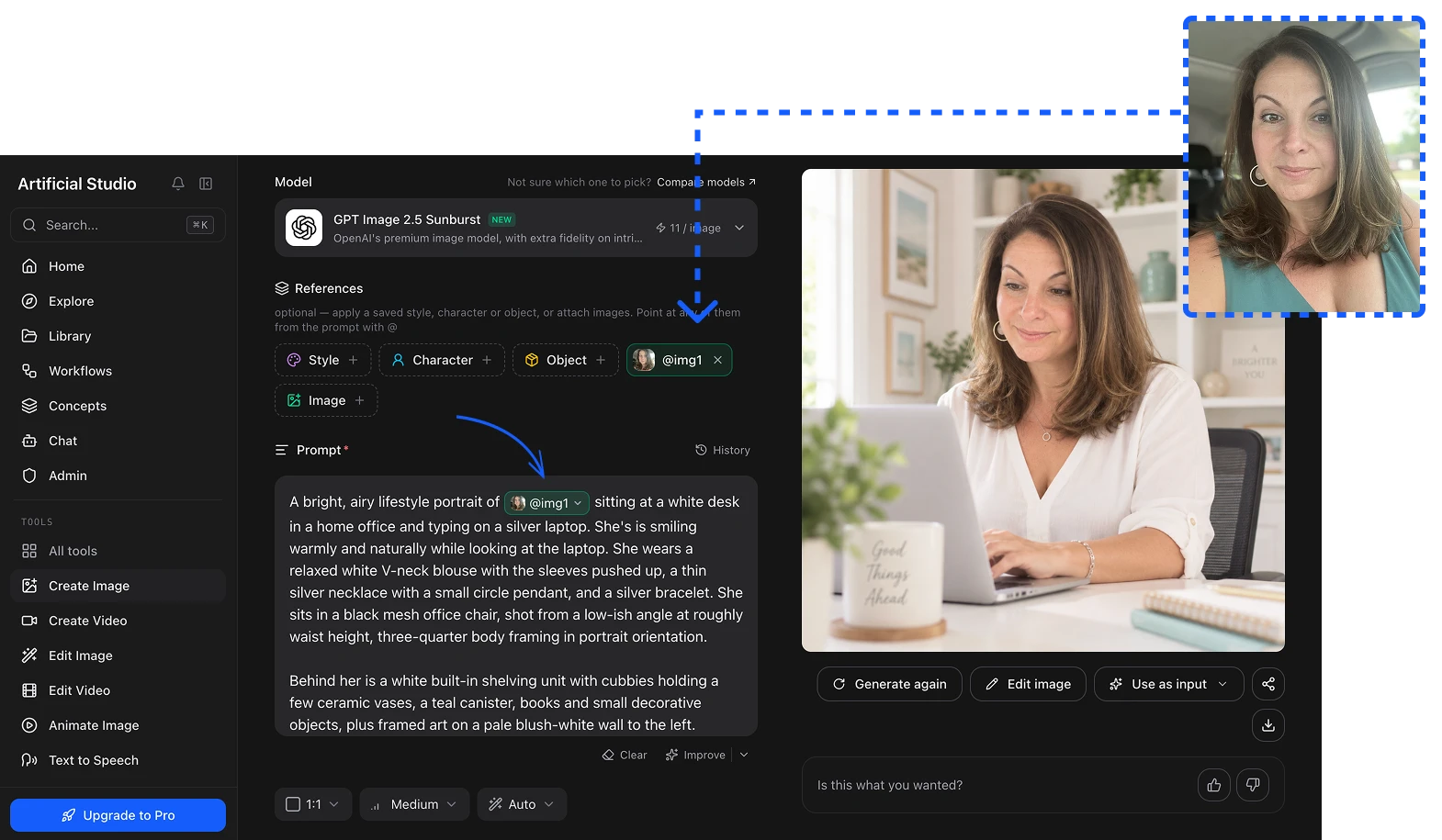
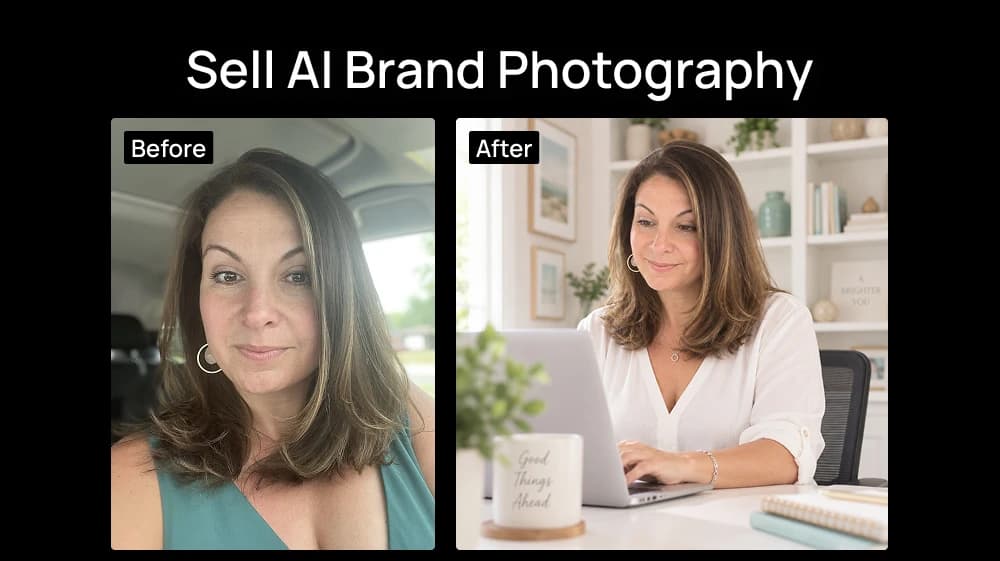
↑ In this image you can see how styles and references work in Artificial Studio: upload at least one reference from your brand (or your face) and use it to create images. Here, a simple AI prompt with a picture of a woman in her car produces a photo that looks completely realistic and professional.
Your clients don't need to be convinced they want better photos. They need to be told they can have them for a fifth of what they assumed.
Try it yourself
Start creating with the tools mentioned in this article.