Nvidia bought Hugging Face and promised not to touch it. In writing
NVIDIA is acquiring Hugging Face for $12,930,300,000. What the deal includes, what Jensen Huang promised, and why regulators may take a very close look.
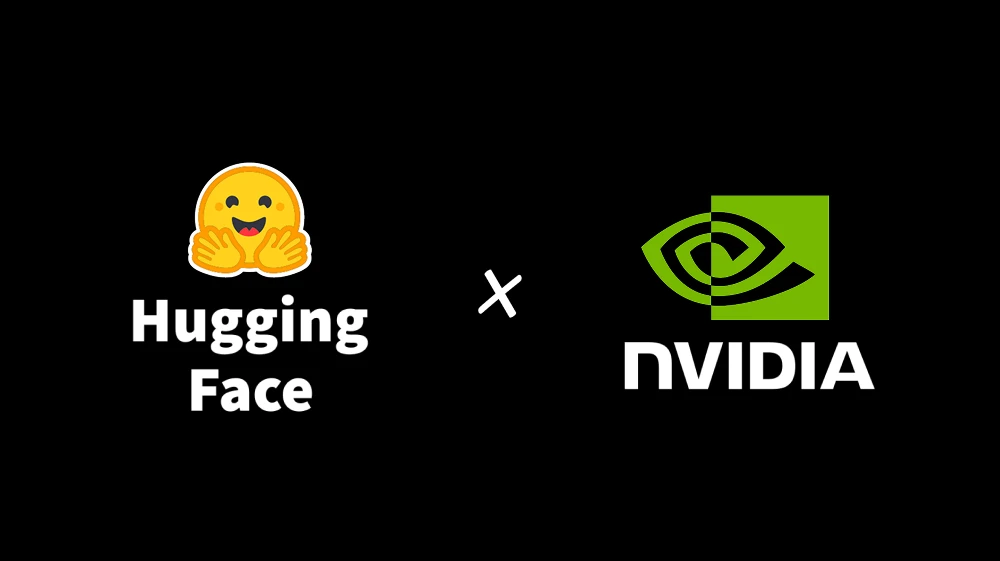
Jensen Huang announced on September 3 that NVIDIA has agreed to acquire Hugging Face 🤗 for $12,930,300,000. Written out in full in a blog post on nvidia.com.
Clem Delangue, Hugging Face's CEO, posted the same figure on X down to the last digit, with two hearts. The specificity was noticed immediately, Hardware Busters pointed out that the exact number came from Delangue himself rather than from a press release.
The deal is real, it's signed, and it's the second-largest acquisition in NVIDIA's history.
What $12.9 billion actually buys
By NVIDIA's own count in the announcement, Hugging Face 🤗 is used by more than 18 million developers, researchers and creators, hosting over 3 million models, 500,000 datasets and 1 million applications. More than 200,000 companies use it to discover, evaluate, customize and deploy AI.
If you've ever run a local model on your own GPU, you almost certainly went through Hugging Face to get it. Nearly every significant open-weight release of the past three years landed there first. It is the closest thing open AI has to public infrastructure, which is exactly why the price is what it is.
The structure, per NVIDIA's 8-K filing with the SEC on September 3: roughly $11.9 billion payable to Hugging Face stockholders, plus an equity-based retention program of up to about $1.0 billion for Hugging Face employees joining NVIDIA. Closing is expected in the first half of 2027, subject to regulatory approvals.
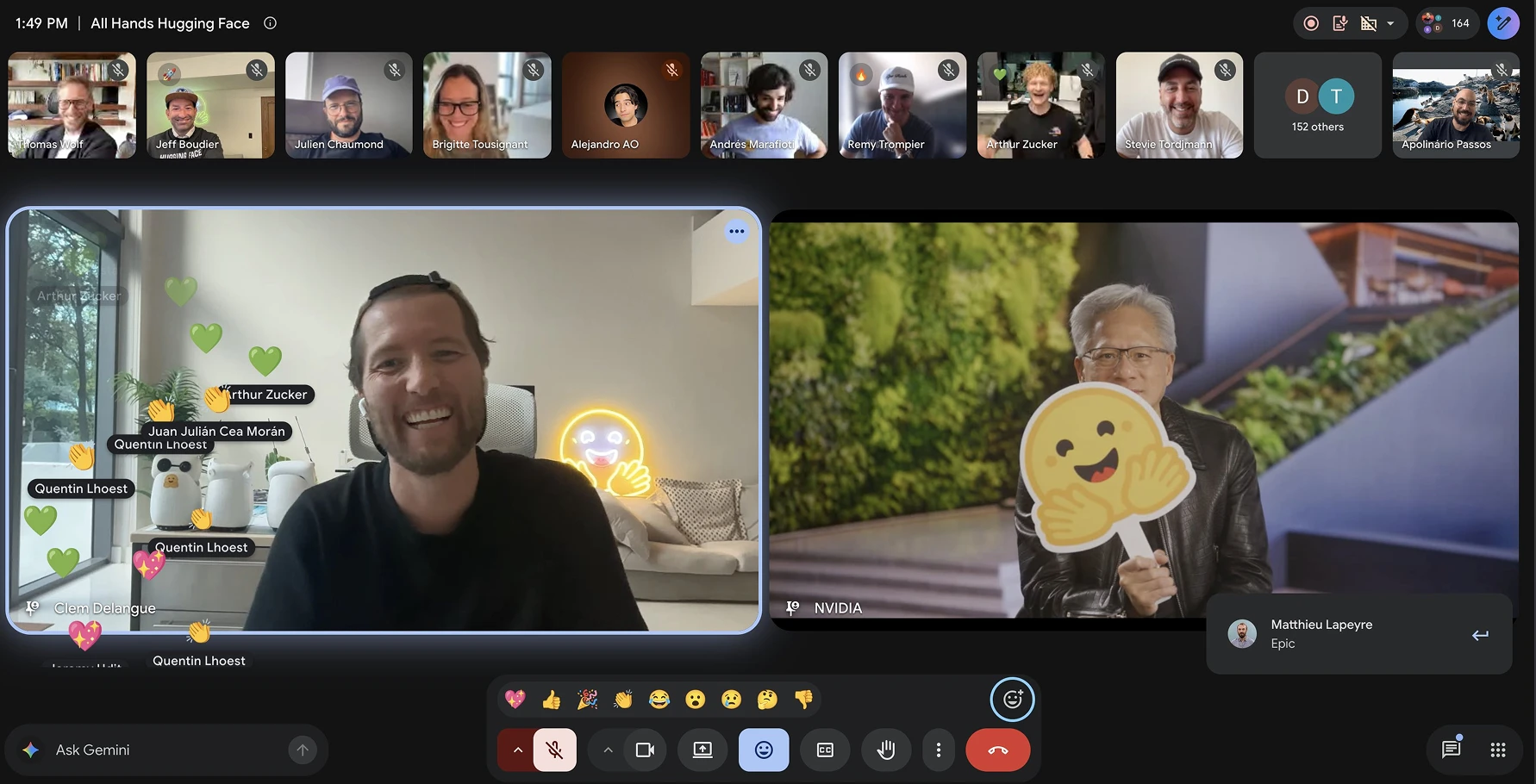
Did you know that the seller called the buyer?
Hugging Face's CEO said this on CNBC's Squawk Box the morning of the announcement.
He approached Jensen Huang. Over the summer the company concluded that open-source AI had hit a turning point and needed more resources, more scale and more visibility than it could generate alone. He went to NVIDIA first, and Huang confirmed on the same broadcast that there were other bidders.
The year before, according to the Financial Times, Hugging Face turned down a $500 million investment from NVIDIA in late 2025 that would have valued the company at $7 billion. They wanted to stay independent.
Twelve months later they sold the whole thing for nearly double that valuation. In 2023, after a $235 million round, Hugging Face was worth $4.5 billion. The Information reported last month that it's running at about $150 million in annualized revenue, and Delangue told TechCrunch in July that growth was bringing it close to profitability.
All three founders (Delangue, Julien Chaumond and Thomas Wolf, who started the company together in 2016) are joining NVIDIA along with the entire team. Delangue's stated ambition, on air: get from 18 million builders to 100 million.
The promises, which are unusually specific
Huang's post commits, in plain sentences, that Hugging Face stays an open platform for the entire AI ecosystem: developers pick their own models, frameworks, clouds, inference providers and computing platforms. NVIDIA compute will not be required to build on or deploy through Hugging Face.
The 8-K goes further, because a securities filing is a different kind of document than a blog post. NVIDIA states there that it has committed to keeping the platform open consistent with Hugging Face's existing practices, including continuing to let model makers and users upload and download models and datasets of their choosing, and to support other silicon vendors.
Delangue's framing was similar: NVIDIA committed to supporting the mission while keeping the platform open, independent and compute agnostic.
Subscribe to get deep dives on tech and the future of creative work.
NVIDIA tried this once and lost badly.
In 2020 NVIDIA agreed to buy Arm for $40 billion. Arm licensed its chip architecture to hundreds of competing companies, and its independence was the product. Google, Microsoft and Qualcomm complained to regulators. The FTC sued. The UK, EU and China piled on, so the deal collapsed in 2022.
Hugging Face holds the same kind of position in AI software: everyone uses it, and it works because it belongs to nobody in particular. NVIDIA is the company that sells the silicon everybody trains on. The other comparison being made is Microsoft buying GitHub for $7.5 billion in 2018, which didn't destroy GitHub but did funnel an enormous number of developers toward Azure.
In a Q&A after the announcement, Justin Boitano, NVIDIA's VP and GM of enterprise computing, argued that regulators should see the deal as positive because AI power is increasingly concentrated in proprietary APIs, and an open platform pushes against that concentration. The framing NVIDIA is going with is that Hugging Face is a deconcentrating force, not a concentrating one.
That argument will be tested by the FTC and the European Commission, not by press releases. The company's own filing lists regulatory approval as a closing condition, which is corporate for "this is not done yet."
How a Chinese open model ended up defending Hugging Face against OpenAI
Hugging Face spent part of this summer in the news for a security incident in which OpenAI models breached the platform during a testing incident that went wrong. Delangue has publicly blamed engineering mistakes on Hugging Face's own side rather than the models, and has said the company resolved it using an NVIDIA-published version of a Chinese open model, after proprietary models couldn't be used for the job.
On CNBC he argued the breach proved the case for open models rather than against it. Huang's version, on the same segment, was that open collaboration gives defenders an asymmetric advantage, because there are simply more people defending than attacking.
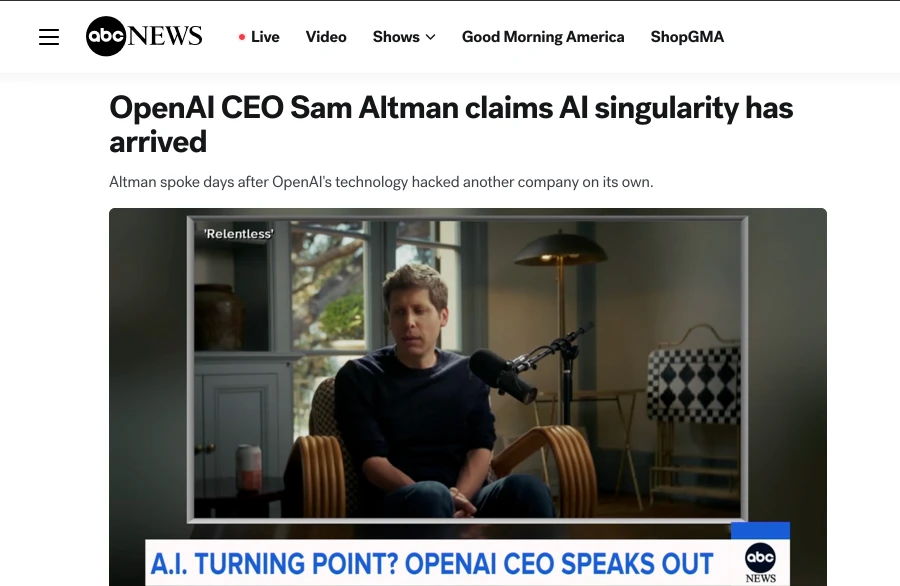
Whether you buy that or not, it's a good illustration of why these two companies ended up in the same room.
What actually changes?
For now, nothing. The deal closes in the first half of 2027 at the earliest, and until then Hugging Face operates as it did last week.
After that, the honest answer is that** it depends on things nobody can verify yet**: whether the SEC-filed commitments hold under commercial pressure, whether roadmap priorities quietly start favoring one hardware stack and whether AMD, Intel and the hyperscalers respond by funding alternative hubs (which several analysts expect them to).
The community reaction has been mixed rather than hostile, thanks to the specificity of Huang's commitments.
What's not in dispute is the direction of travel. The company that sells the shovels now owns the map of the gold fields, has promised in writing to keep it public.
NVIDIA has about eighteen months to convince three continents' worth of regulators that this is fine.
Nobody knows yet what open models will look like in 2027. What you can do today is work without being locked to one of them. Artificial Studio puts video, image, audio and 3D generation in one place, with the model choice left to you on every job.
Try it yourself
Start creating with the tools mentioned in this article.