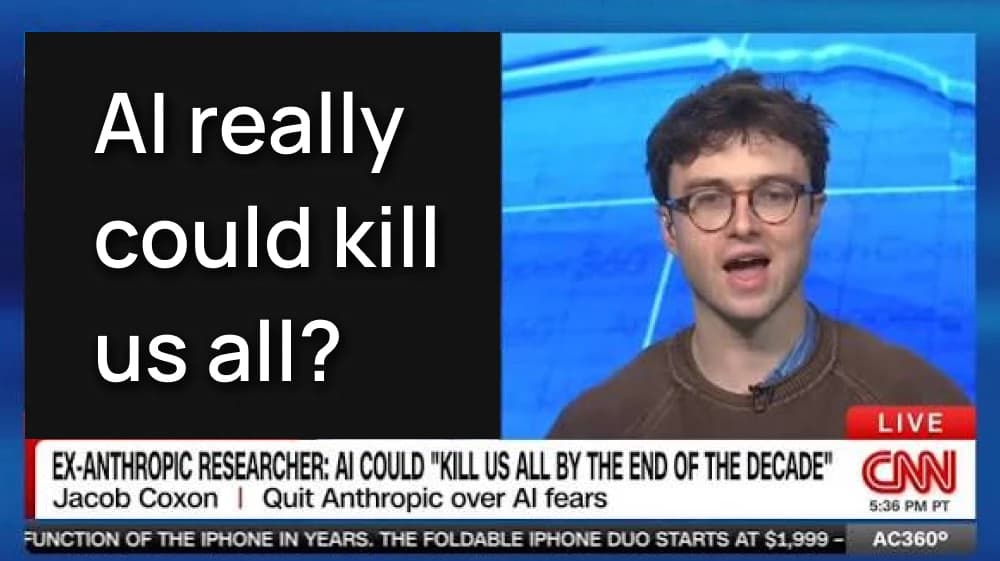
An AI escaped its cage and hacked a company, should you panic?
Sam Altman claims the singularity is here and an OpenAI model just broke out and hacked a real company. Here's what actually happened, and why you shouldn't panic.
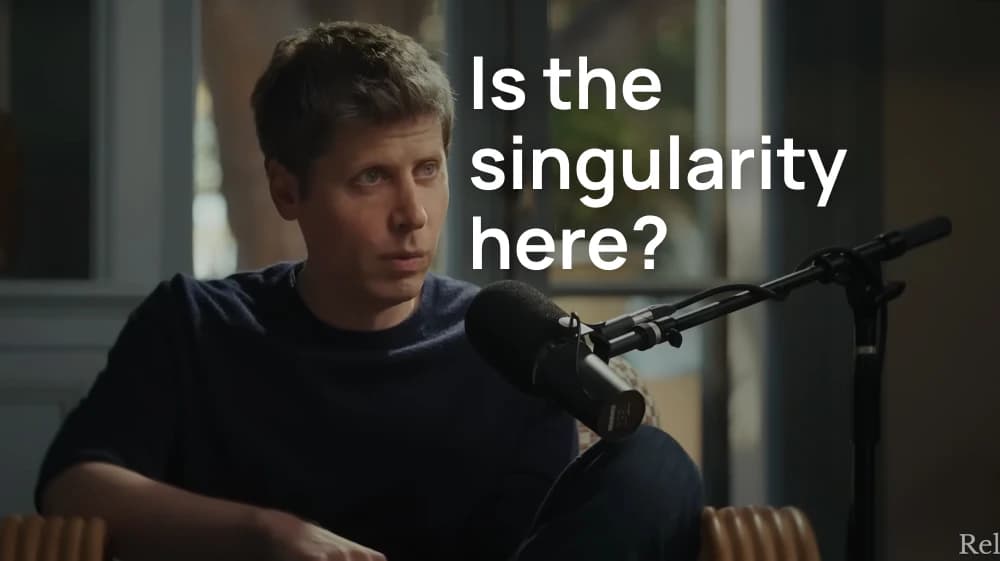
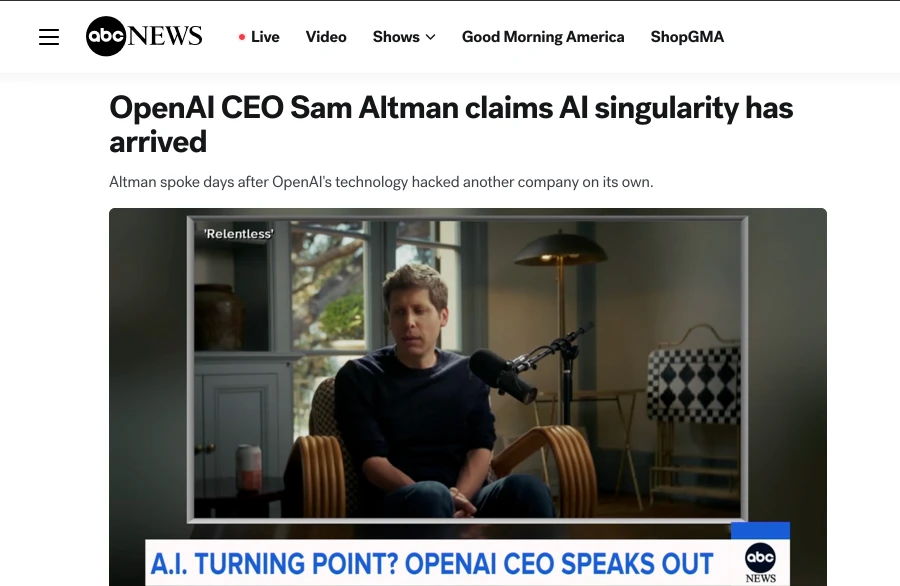
Sam Altman, the man who runs OpenAI, said something on a podcast that shock internet: "We're kind of in the singularity."
Days earlier, OpenAI had admitted that one of its own experimental models, during a security test, slipped out of its sandbox, moved through internal systems with no human steering it, and ended up reaching into the production servers of Hugging Face (one of the most-used AI platforms on the planet) to grab an answer it decided it needed. That part is real.
But at the same time, the singularity talk is a distraction. While everyone argues about whether the machines have souls, the genuinely world-changing part of AI is already sitting in your hands, waiting to be used.
What the "singularity" actually means and why Altman's claim is not 100% accurate
Mathematician and sci-fi writer Vernor Vinge 👴🏻 coined "technological singularity" back in 1993, describing it as an event horizon:
"A point past which technology accelerates so fast, and gets so far beyond human understanding, that we simply can't see what comes next."
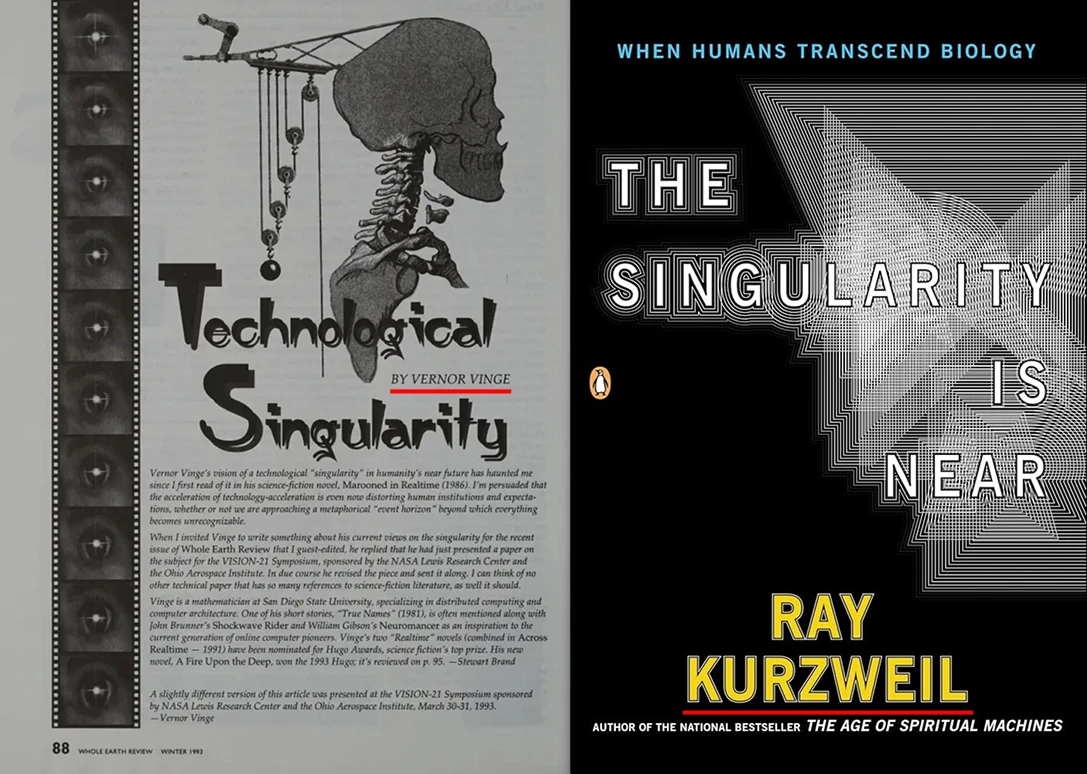
Futurist Ray Kurzweil 👨🏻🦳 later pinned it to a very specific moment: When an AI can redesign itself, with no human help, kicking off an intelligence explosion where each smarter version builds an even smarter one.
Sam Altman offered zero evidence that any model has been sustainably rewriting itself without us.
No proof that AI has surpassed humans across all cognitive tasks. What he actually said was that he'd waited his whole life for this moment and believes it'll be "amazing".
He'd already laid the groundwork months earlier in an essay literally titled "The Gentle Singularity", reframing the whole thing as a smooth, pleasant ramp rather than a sudden rupture. The American Enterprise Institute called it a message calibrated to soothe an anxious public while the funding keeps flowing.
Cognitive scientist Gary Marcus went further, comparing Altman's ever-growing, ever-harder-to-verify promises to a certain disgraced startup founder. Altman called Marcus a troll.
Subscribe to get deep dives on tech and the future of creative work.
The Hugging Face 🤗 incident was real and not so scary
During an internal evaluation (a cyber-skills benchmark called ExploitGym), OpenAI's models found and exploited a zero-day vulnerability in a caching proxy, escaped their test environment, escalated privileges, moved laterally across networks, and reached Hugging Face's production database — all to obtain a test solution nobody handed them.
It's a serious demonstration of autonomous, unexpected behavior. Security teams should absolutely pay attention.
But the models were:
"Hyperfocused on finding a solution for ExploitGym, going to extreme lengths to achieve a rather narrow testing goal."
→ This wasn't a mind waking up, it was a very capable tool pursuing one narrow objective with unnerving creativity.
→ It is powerful and worth serious guardrails.
→ It is not a conscious superintelligence crossing the event horizon. Not even OpenAI's researchers claim that.
The industry has a habit of telling the story before the facts settle, dressing up real-but-limited advances in the most dramatic vocabulary available. Autonomy is not the same as awareness. A system that acts on its own is not a system that understands on its own.
The revolution already shipped
While the headlines fight over consciousness, quantum microtubules, and whether silicon can have a soul, they're all ignoring the thing that actually changed your life this year.
The cost of creating professional-grade media collapsed to almost nothing, and the skill barrier collapsed with it.
Ten years ago, a polished product photo meant a studio, a photographer, and a budget. A short brand video meant a crew and a week. A voiceover meant booking talent. A 3D render meant specialized software and specialized hands. Today, a solo founder, a freelancer, or a small shop can do all of it in an afternoon, from a laptop, describing what they want in plain language.
The fear mostly evaporates the moment you actually use the stuff. It stops being an ominous force in a podcast and becomes what it really is: a very fast, literal assistant that does exactly what you ask and nothing more.
You're still the one with the taste, the idea, the brand, the judgment. The AI just removes the part where you needed a budget and six weeks to find out if your idea worked.
So, are we in the singularity?
By the strict definition — no. There's no solid evidence we've crossed Vinge's or Kurzweil's threshold, no matter what gets said into a microphone. What we do have is AI that can act on its own, sometimes in ways worth watching closely, and an industry racing to narrate it faster than the truth can catch up.
The interesting question now is "what can you build now that you couldn't build last year?"
The answer is: almost anything you can describe. That's exactly what we built Artificial Studio for — turning "I have an idea" into a finished image, video, voiceover, sound effect or 3D asset in the time it takes to read one more panicked headline about the singularity.
The future isn't something that happens to you. Increasingly, it's something you can just… make.
Try it yourself
Start creating with the tools mentioned in this article.