Stop asking AI for results. Start giving it a structure.
The creatives getting the best work out of Claude and ChatGPT aren't prompting harder. A new paper on how coding agents are steered explains why, and what it means for anyone doing client work with AI.
You describe what you want to AI: a landing page, campaign concept, the copy for a pitch, a component for a client's site. You hit enter, and what comes back is fine. But it's not what you had in your head, and now you're three follow-up prompts deep trying to nudge it there.
The problem is that you only told it half of what it needed.
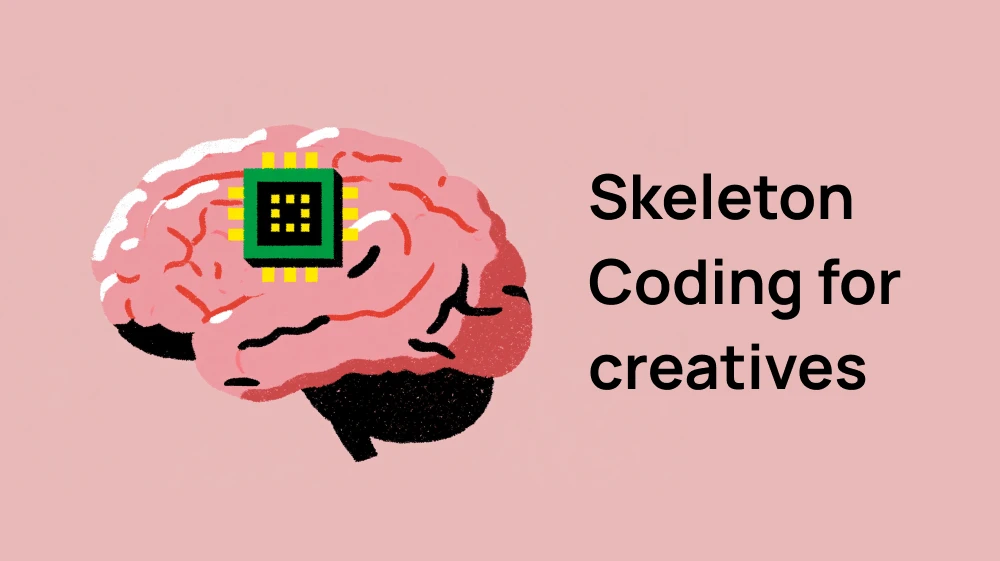
“Skeleton Coding”: the research that explains the gap
A new paper from AWS's Agentic AI group, Skeleton Coding: Program Structure as a Specification for Agents (October 2026), set out to answer a deceptively simple question:
When you ask an AI agent to build something, how much do you have to specify before it reliably produces what you actually meant?
When you give an AI only the "what" (the result you want, examples of it, tests it should pass) you've left the "how" entirely up to the model. How the thing is structured, how its pieces fit together, what the rules are. The AI picks all of that silently, on your behalf.
So two requests that sound identical can land in completely different places, and you can't actually tell whether your instructions were complete without inspecting everything that came back.
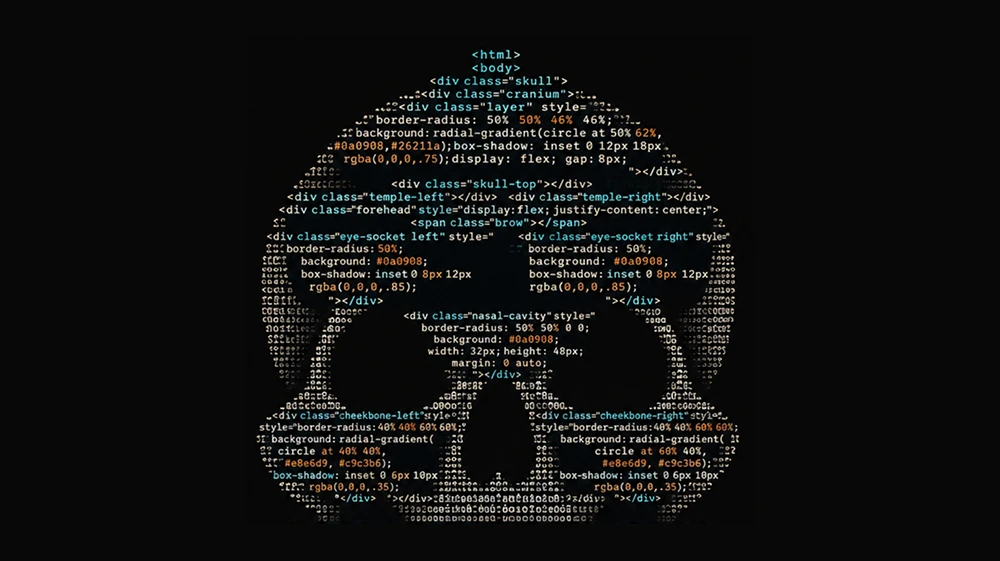
The researchers tested the alternative: give the model a skeleton up front (the structure, components, flow, constraints, definition of what "correct" means) and let it fill in the implementation.
Across four models and three benchmarks, that cut the error rate by roughly 48% compared to the best version of "just describe the result you want." Smaller, cheaper models given a good skeleton came within a few points of the biggest models. And the output was cleaner, less of the accreting, patched-over mess the paper calls "code erosion," and most of us call AI slop.
How creatives can use this
That paper is about code. You might reasonably ask what it has to do with a brand designer or a freelance art director.
More than you'd think. The line between "creative" and "builds things with AI tools" has basically dissolved. This year's AI in Design Report 2026, based on 900+ designers, found that half of them have pushed AI-generated code to production, and only a fifth call themselves engineers. It also found that Claude overtook ChatGPT as the most-used tool in the field, with Claude Code going from not existing to 65% adoption in a single year.
The point isn't that every creative is now a developer. It's that creatives are no longer chatting with AI, they're producing with it. Decks, sites, copy systems, prototypes, client deliverables. Today, AI is more a production tool than a brainstorming toy, so is very decisive.
What a "skeleton" looks like when you're not writing code
Forget function signatures and contracts. In creative and client work, a skeleton is just the set of decisions you'd make before you started producing anything, the ones a good creative director or a senior freelancer makes without thinking.
Asking for a result sounds like:
"Write the homepage copy for a B2B fintech startup."
Giving a structure sounds like:
"Homepage copy for a B2B fintech startup. Structure: a hero that names one specific pain (reconciliation takes finance teams days), three proof sections — speed, security, integrations — each a claim plus one concrete number, then a close that addresses the 'is this safe' objection. Voice: plain, no hype, short sentences. Don't explain what fintech is; the reader already knows."
The second one is longer, but notice what it actually contains: the order of the argument, what each section has to do, what's off-limits, what "good" means here. That's the skeleton.
The same move works everywhere creatives use these tools:
- A pitch deck: don't ask for "a deck about our rebrand." Give the narrative spine (the tension, turn, reveal, the ask) and let it draft into that shape.
- A client site: name the sections, the hierarchy, the components, the states, the one thing each page is for.
- A content system: define the format, the recurring structure, the constraints, the voice — so the tenth asset still looks like it came from the same brain as the first.
- A brand campaign: specify the through-line and what each channel execution has to preserve, rather than generating ten disconnected variations.
In every case you're handing over the implementation and keeping the architecture. Which, not coincidentally, is where your judgment was always worth the most.
Subscribe to get deep dives on tech and the future of creative work.
But more isn't the answer
The paper found that piling on detail doesn't keep helping, and past a point it actively hurts, especially with smaller, faster models, which get worse when you bury them in over-specified instructions. The win didn't come from more. It came from the right structure: the load-bearing decisions, stated clearly, and little else.
The instinct is to add: another clause, example, "make sure you also…" until the prompt is a wall of caveats and the output somehow gets blander. The skeleton approach says: don't add more rules. Get the few structural ones right, and let the model do what it's good at inside them.
It is like the difference between a brief that gives a strong point of view and three hard constraints, and a brief that micromanages every pixel and produces something lifeless. You already know which one gets better work out of a human.
How to actually do it
A working version, next time you open Claude or ChatGPT for real client work:
- Before prompting, make the decisions you'd make anyway. What are the parts? In what order? What's the one job of each? That list is your skeleton.
- Specify structure, not adjectives. "Three sections, each a claim plus a number" beats "make it compelling and professional".
- State what's off-limits. The constraints (what not to do, what to assume the reader knows) carry as much signal as the instructions.
- Define "done." What would make you reject the result?
- Resist the urge to pile on. If the output's wrong, fix the structure, don't add another rule. More instructions usually means worse, not better.
- Keep the skeleton. Reuse it across the project so everything stays consistent — and so the thinking is reusable, not retyped every time.
As AI absorbs more of the execution, the value relocates to the structure: the decisions about what the thing is and how it's shaped. The paper puts it in a complicated language but creatives have a shorter word for it: direction.
That's genuinely good news for anyone worried about being flattened by this stuff. The skill that matters isn't typing the cleverest prompt. It's knowing what good is, breaking it into parts, and holding the point of view steady while the machine does the filling-in. That was always the senior move. AI just made it the whole job.
Bring the structure and the point of view, and let the tools handle the execution. That's the idea behind Artificial Studio — 60+ AI tools for image, video, audio, music and 3D in one place, where you can lock in your own references and visual style and generate across every format, while every creative decision stays yours. The model fills in the work. You still draw the skeleton.
Try it yourself
Start creating with the tools mentioned in this article.