The old software model is dying. Adobe is the proof.
You don't actually need Adobe. Between subscription traps and its Firefly AI mess, the old software model is dying, and the alternatives finally caught up.
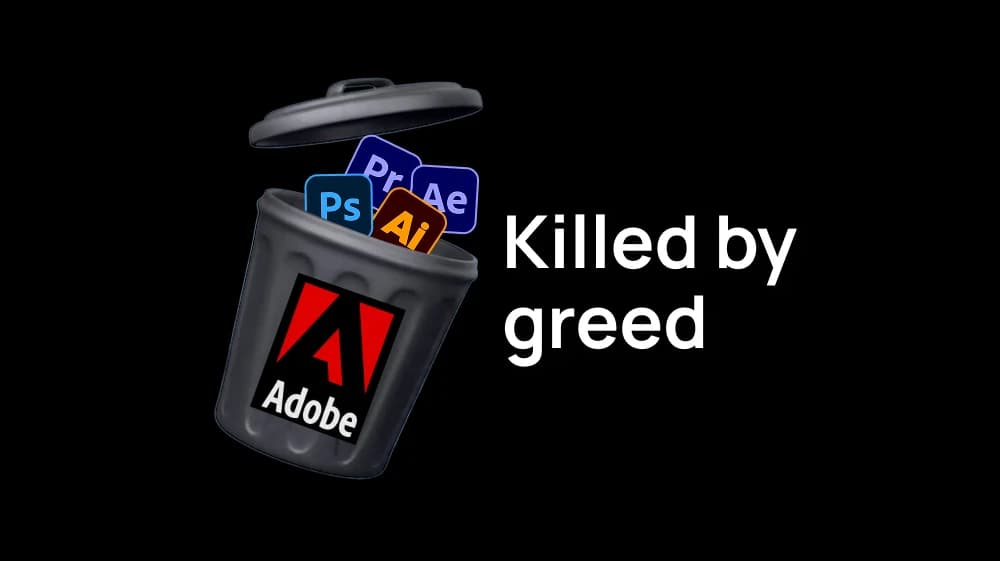
Adobe makes some of the most-used creative software on earth: Photoshop, Premiere, Illustrator, After Effects are practically industry standards. It's also one of the most resented companies by the very people who use it every day. The tools they can't work without belong to a company they can't stand.
And it's not just that the software is expensive 💸. Somewhere along the way, Adobe made a decision that rewired its relationship with its users. If you're a creator in 2026, understanding that shift is the key to realizing that you probably don't need the cage anymore.
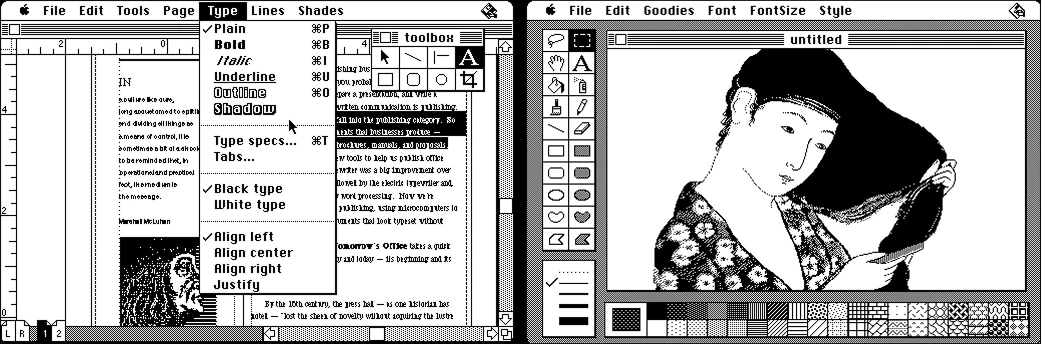
"Buy it once" became "pay forever"
Before 2012 you bought Photoshop and it was yours. A few hundred dollars one time, and that version kept working until you decided to upgrade. Then Adobe launched Creative Cloud: you no longer bought the software, you rented it.
From a business standpoint, it was genius. A designer who bought Photoshop once might use it for five years without paying another cent. Turn that into a subscription and the same designer becomes a guaranteed monthly payment. By 2023, the large majority of Adobe's revenue came from subscriptions.
The problem was the exit. The default Creative Cloud plan reads as flexible, but it's actually a one-year contract billed in installments.
Cancel early and you're hit with a penalty of half the remaining payments 🪤
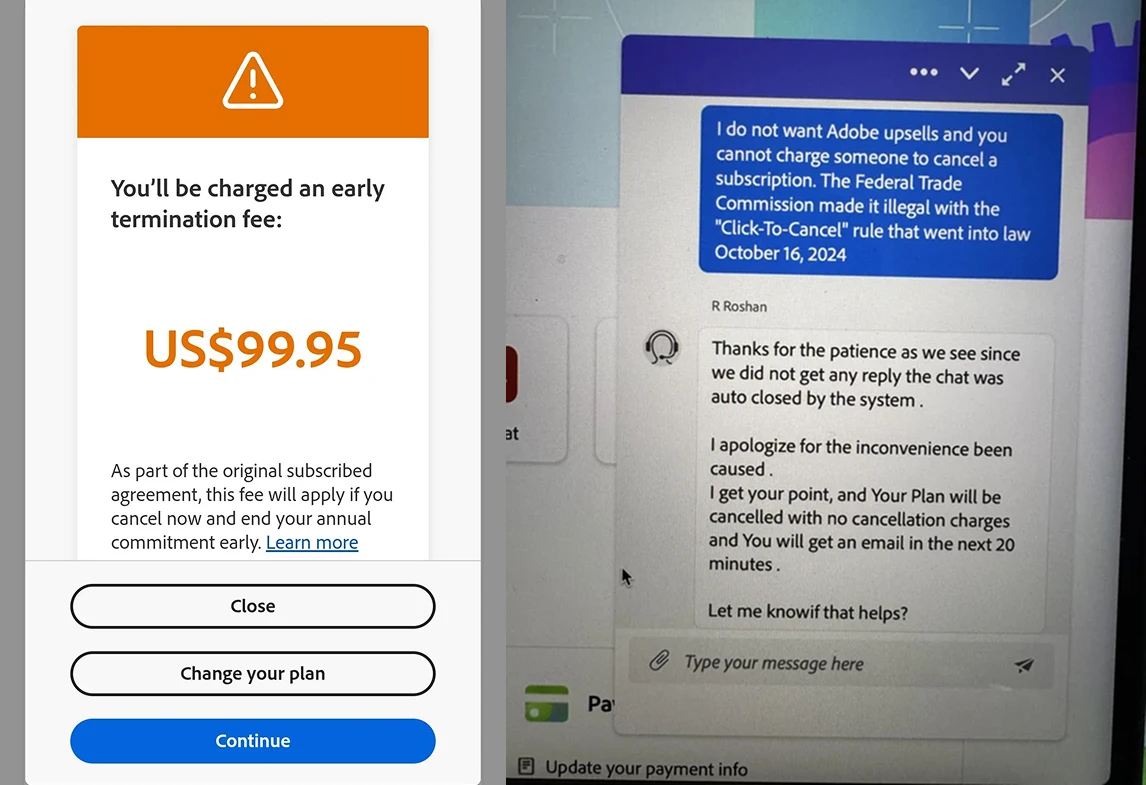
In June 2024, the U.S. Federal Trade Commission sued Adobe, alleging the company buried its early-termination fee in fine print and made cancellation a maze of screens and phone transfers. In March 2026, Adobe agreed to a settlement worth $150 million ($75 million in civil penalties plus $75 million in customer services) to resolve the case, as CNBC reported. Adobe admitted no wrongdoing.
Buy the competition, or bury it
When a better idea appeared, Adobe's response wasn't to out-build it, It was to buy it.
They offered Figma an astonishing $20 billion in 2022
This design tool run in the browser, need no installation, and have real-time collaboration in a way Adobe can't match. Regulators in the U.S. and Europe saw the move for what it was and blocked it. The deal collapsed in December 2023, and Adobe paid Figma a $1 billion breakup fee for nothing.
It's a familiar pattern: acquire what's useful, let the rest die, and make sure nothing gets big enough to challenge the core.
Subscribe to get deep dives on tech and the future of creative work.
Adobe broke the trust of its users
In June 2024, Adobe updated its terms of service with a pop-up demanding you accept new language just to keep using your own tools. The wording granted Adobe a broad license to content you stored in its cloud.
After the backlash, Adobe clarified it wouldn't use that content to train AI. It landed badly, because Adobe's own AI: Firefly had been marketed as the "ethical and commercially safe" generative model trained only on properly licensed images. Then Bloomberg reported that Firefly had been partly trained on AI-generated images from Midjourney while some Adobe Stock artists said they'd never consented to their work training the model at all.
A company builds an AI on the output of its own users, then sells that AI back to those same users as a tool that automates the very skills they spent years (and subscription dollars) developing.
In March 2026, CEO Shantanu Narayen announced he'd step down after 18 years, in a moment Fortune said about him "The AI era is turning Corporate America into a CEO churn machine" 📉.

"Shantanu Narayen, who stepped down from his role as CEO of Adobe Systems recently, will have a lot more time for golfing now." Seen in Fortune
Adobe is having the worst reputational moment of its history:
- A federal settlement for the predatory subscription 🔒
- A dead $20 billion merger 🪦
- An AI strategy at war with its own base 🤖
Adobe is no longer indispensable.
"What else are you going to use? Adobe is the standard!
Switching meant relearning everything and breaking your workflow. But that is not 100% true anymore.
- For video, DaVinci Resolve does nearly everything Premiere does and beats it outright on color, with a free version and no subscription.
- For vector and layout, Affinity offers Illustrator, and InDesign, class tools with no recurring fee at all.
- And a whole generation of AI tools now handles all the work: image generation, video generation, 3D objects, audio, music...

The real cost of leaving Adobe was the switching cost: years of muscle memory, clients who send and expect Adobe file formats, workflows built around one ecosystem. That friction is not a wall anymore.
The model that's replacing it ✨
The old model was about capture: lock you in, make leaving expensive, and turn your dependence and your work, into recurring revenue 💰. The model replacing it runs the other way. Pay for what you use, own what you make. Leave whenever you want 🚪, because nothing is holding your files hostage.
That's the whole premise behind how we built Artificial Studio: a place where you buy credits and spend them on the tools you actually need: image, video, audio, 3D, marketing, branding. No predatory subscription that forces you to pay penalties for leaving. You create something and it's yours.
It's not the whole answer to replacing a decade-old creative stack, and it doesn't pretend to be. It's just built on the opposite assumption from the one that made Adobe rich and resented: that the tools should work for the creator, not the other way around.
Adobe won't disappear tomorrow. But the era where it could treat its users as a captive audience is ending, and for the first time the people who make things get to choose.
Try it yourself
Start creating with the tools mentioned in this article.