Claude Design launched today and Figma's stock immediately crashed
Anthropic launched Claude Design today and Figma's stock fell 7%. We tested it the same day. Here's what happened and what it means for every creative professional.
Today, Anthropic launched Claude Design — and within hours, Figma's stock dropped 7.28%. Adobe fell 2.7%. Wix dropped 4.7%. The market didn't wait to form an opinion.
💡 The Artificial Studio team tried Claude Design the same day it launched, using it to build a presentation deck from scratch. The result was, and we don't say this lightly, unlike anything we've seen from an AI design tool before.
Faster than expected. More intuitive than ever. And the output looked like something a real designer spent hours on.
Why Figma's stock dropped 7.28% the moment Claude Design went live
Figma holds an estimated 80–90% market share in UI and UX design. It is the dominant tool for designers building websites, apps, and digital products. It has been essentially unchallenged in its category for years.
Then Anthropic's Chief Product Officer Mike Krieger (who co-founded Instagram and previously held a board seat at Figma) quietly resigned from that Figma board on April 14th. Two days later, reports surfaced that Anthropic was building a competing design product. On April 17th, Claude Design launched.
Figma's stock fall because investors recognized that Claude Design doesn't assume a trained designer is in the loop. Figma and Adobe both do. That's the structural difference — and it's the same structural difference that disrupted every creative category before this one.
What Claude Design actually does
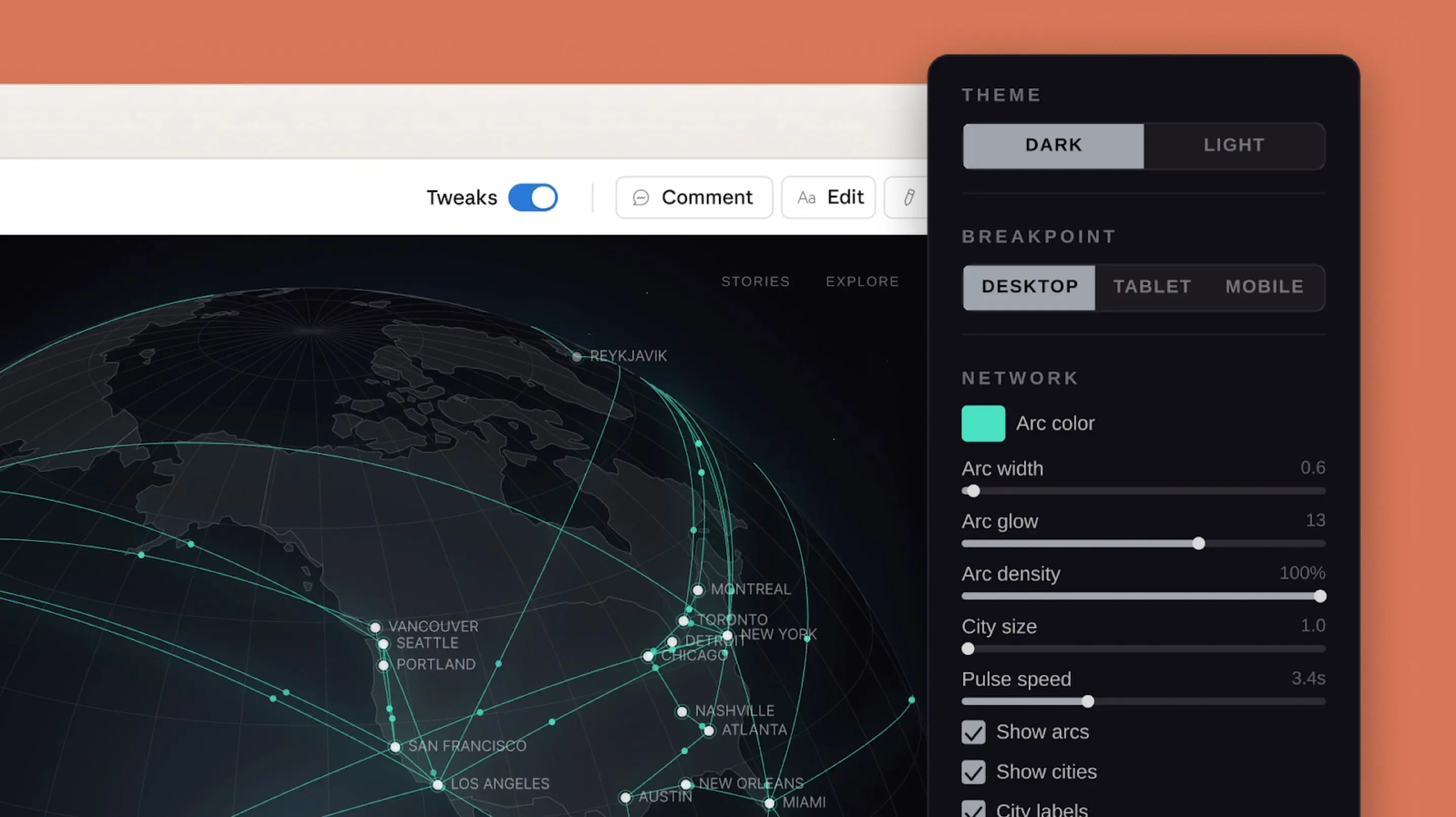
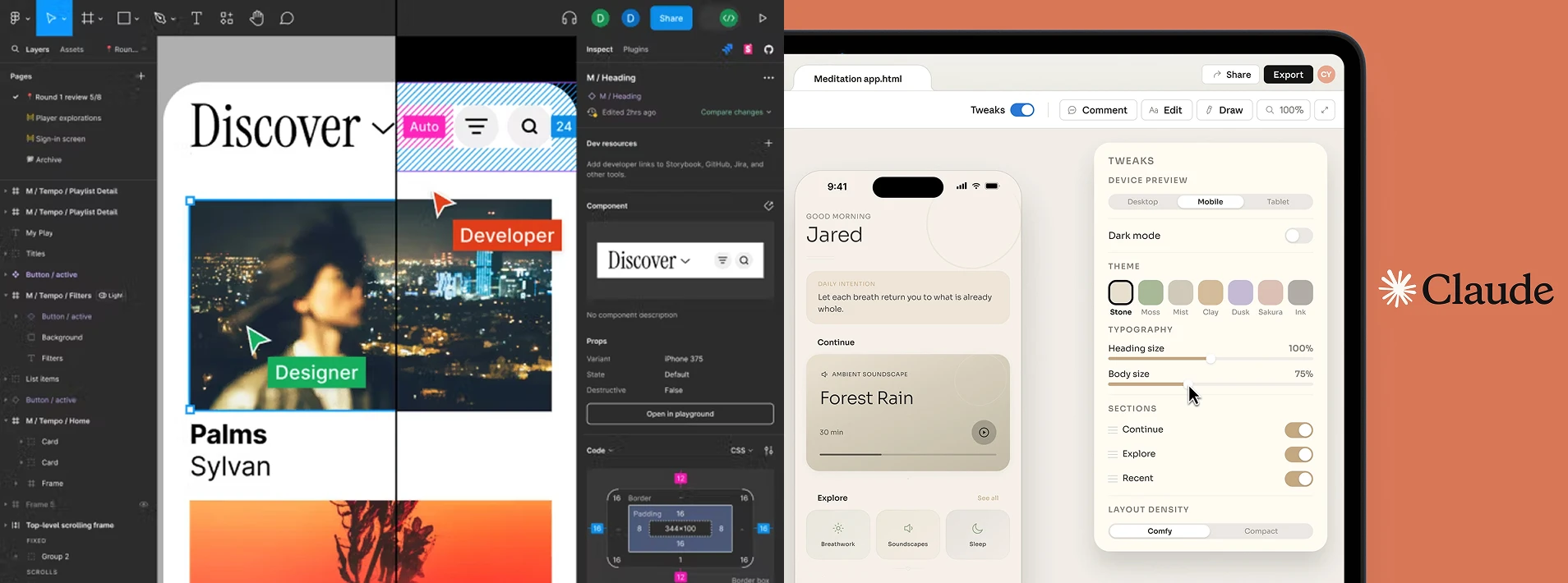
Claude Design is a new product (currently in research preview for Claude Pro, Max, Team, and Enterprise subscribers) that lets you create polished visual outputs through conversation. Slide decks, app prototypes, one-pagers, marketing mockups, pitch presentations, emails. You describe what you need, Claude generates a first version, and then you refine it through a combination of chat, inline comments, direct edits, and custom sliders that Claude itself creates to control spacing, color, and layout.
The deeper capability is the design system integration. During onboarding, Claude reads your company's codebase and design files, extracts your colors, typography, and components, and applies them automatically to every project it creates. Every output is on-brand, and you can even upload Figma files!
Exports work across PPTX, PDF, HTML, Canva, and shareable internal URLs. Multiple team members can access and edit simultaneously.
It runs on Claude Opus 4.7, Anthropic's most capable model to date.
We tested it the same day it launched
The Artificial Studio team opened Claude Design on the day of launch and used it to build a presentation deck.
The experience was genuinely different from every other AI design tool we've tried. This is actually ready: the layouts were clean, hierarchy was correct and the visual logic held up across slides. Asking it to revise a specific section through chat worked exactly as described: it understood what we were pointing at and changed it without breaking everything else.
What surprised us most was how fast the iteration loop was. Most AI design tools feel like you're prompting into a black box and hoping the next output is closer to what you wanted. Claude Design feels like working with someone who actually understands design principles and can have a conversation about them.
Subscribe to get deep dives on tech and the future of creative work.
Is it replacing a senior designer with fifteen years of experience and deep brand knowledge? Of course not.
💡 But it does replace the three hours a founder spends building a deck in PowerPoint, or the junior designer tasked with making a one-pager before a client call. Absolutely.
What happened today with Figma is not new. It's the same pattern that has played out across every creative category that AI has touched.
Canva disrupted graphic design by removing the assumption that you needed to know design software. Midjourney disrupted stock photography by removing the assumption that you needed a photographer. Runway disrupted video production by removing the assumption that you needed a video team. And now Claude Design is disrupting UI and UX design by removing the assumption that you need a trained designer.
Each time this happens, the incumbents say the same thing: "AI can't do what we do." And each time, they're right, until they're not. The gap between what AI can do and what a professional can do closes faster than anyone expects. And by the time it closes, the market has already moved. Figma's 7% single-day drop is the market pricing in that gap closing.
What this means for designers and creatives
A 25-year veteran graphic designer quoted in The Register today said she hasn't used AI tools much because when she tried them, they felt like "a slot machine that doesn't hit." She acknowledged that Claude Design will likely have a significant impact, particularly in corporate environments where there's less creative flexibility.
She's right on both counts. The early AI design tools were slot machines. Claude Design is not.
But here's the thing: the designers who will be most affected are not the ones with 25 years of experience and deep creative judgment. They're the ones whose value is primarily in execution, building decks, making mockups, producing assets to a brief. That work is now faster and cheaper to do with AI than without it.
The question isn't whether AI will change your role. It already is.
The question is whether you're positioned on the right side of that change — using AI to multiply your output and expand what you can offer, or competing against it on execution speed.
If you're a designer, a creative director, or anyone in an agency or freelance creative role: the moment to integrate AI into your workflow was a year ago. The second best moment is now.
Not because AI replaces your brain. But because the professionals who learn to use these tools are going to produce more, charge more, and take on work that would have required a bigger team six months ago. The ones who don't are going to find themselves competing against people who do.
Claude Design is a genuinely impressive tool for presentations and UX prototypes. For everything else creative work requires (images, video, audio, 3D, product visualization, marketing assets) the rest of the AI creative stack exists and is equally capable.
The shift isn't coming. It's here. The only decision left is what you do with it.
Try it yourself
Start creating with the tools mentioned in this article.