China can buy Nvidia's chips now. Here's what that changes for you.
The US just loosened GPU export rules to China. Here's why that geopolitical shift will directly affect the quality and cost of the AI creative tools you use, and how to think about it.
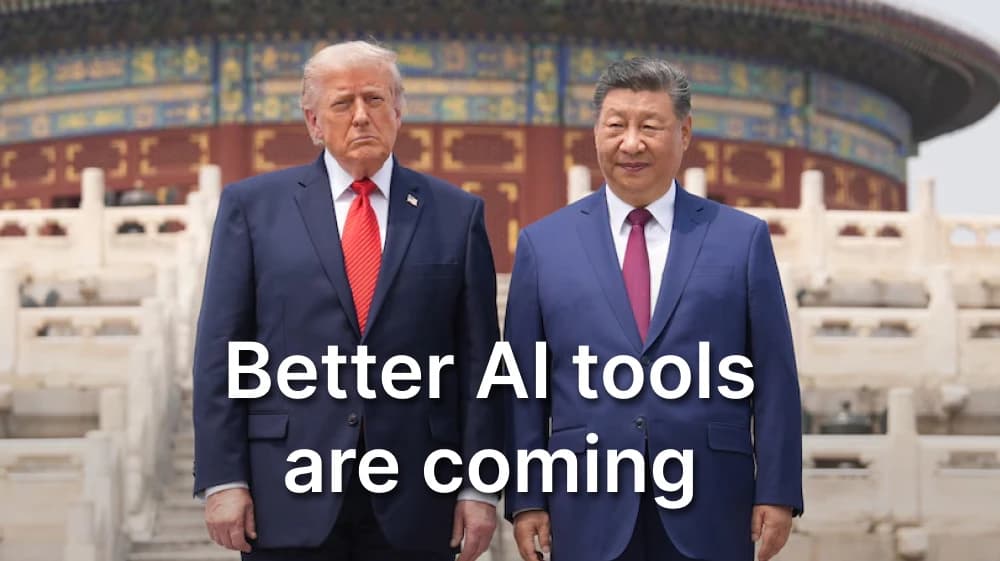
Three days ago, President Trump boarded Air Force One to Beijing with an unusual passenger manifest: 17 American CEOs. Only two got seats on the plane itself — Elon Musk and Nvidia's Jensen Huang. The rest followed on a separate aircraft. Tim Cook was there, and Larry Fink from BlackRock.
Xi Jinping met with all of them. His message was direct: China's door will "open wider" to American business. One of the more consequential pieces of news from that trip was about something most people in creative industries aren't tracking: GPUs.
What actually happened with the chips
A few months ago, the US quietly reversed one of its hardest AI export restrictions. For years, Nvidia's H200 (one of the most capable AI processors available) was completely off-limits for sale to China. That ban is now lifted, conditionally. Each deal still requires inter-agency approval and comes with a 25% tariff, but the door is open.
Nvidia reportedly has 82,000 H200 units ready to ship. Jensen Huang's presence on Air Force One wasn't coincidental: Nvidia has enormous commercial interest in regaining access to what was once its second-largest market.
The restrictions haven't disappeared entirely. Nvidia's Blackwell architecture (the current generation) remains blocked. So do the upcoming Rubin chips. The US just opened a window.
Why creative professionals should pay attention
The AI models that power your image generation, your video tools, your audio generation: all of it runs on GPUs. In data centers, running continuously. The more compute that exists in the world, the faster AI labs can train better models. And better models mean better tools for everyone using them downstream.
China's AI ecosystem has been moving fast despite export restrictions. DeepSeek, the most talked-about AI lab outside of OpenAI right now, is reportedly in talks to raise funding at a $45 billion valuation.
Chinese labs have been building competitive models under constraint. Now, with more access to advanced hardware, that development accelerates. That's not a threat to your workflow. It's actually good news for it!
Subscribe to get deep dives on tech and the future of creative work.
More competition means better models, faster
When American and Chinese AI labs are both competing at the frontier, the pace of improvement speeds up and costs come down. We've already seen this dynamic play out: the release of DeepSeek's models earlier this year put significant pressure on Western labs to ship faster and price more aggressively.
That competitive pressure is what drives the quality and affordability of the tools that creative teams actually use.
The GPU deal doesn't just benefit Nvidia's revenue. It feeds a global race that, historically, has been good for anyone building on top of AI infrastructure, and anyone using products built on top of it.

Nvidia CEO Jensen Huang was spotted on Friday trying some of Beijing’s delicacies
If you're building with AI
The AI models that generate your images, animate your content, and produce your voiceovers exist inside a global infrastructure race.
Geopolitical decisions, like who can buy which chips from whom, directly shape which models get built, how quickly, and at what cost. The platforms that benefit most from this are the ones that stay model-agnostic, integrating the best available models as they emerge, rather than betting everything on a single provider.
When a new Chinese model outperforms Western alternatives on image quality, or when a new audio model cuts latency in half, those improvements should reach the tools you're using without you having to switch platforms.
When the global competition produces something better, you get it. Whoever manufactures the underlying chips is largely irrelevant to your output.
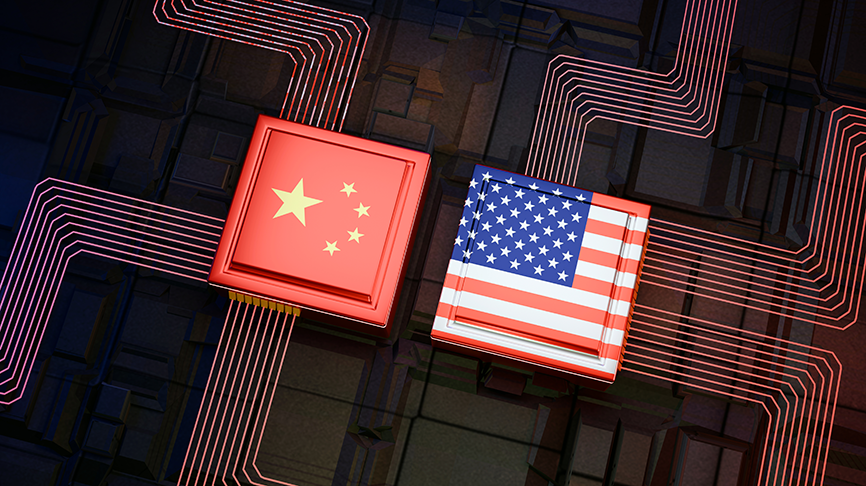
The Beijing summit and the GPU export shift signal something bigger than a trade deal: the US and China are moving cautiously and conditionally, toward a more interconnected AI supply chain. That will accelerate model development on both sides of the world. The winners, in the long run, are the people building on top of those models.
Platforms like Artificial Studio are built exactly for that: integrating the best models as they emerge, so whatever gets built next, you get it without switching tools.
Pay more attention to whether the tools you're using today will give you access to whatever comes next, regardless of where it's built.
Try it yourself
Start creating with the tools mentioned in this article.