Adobe's record year couldn't save its stock.
Adobe made a record $23.77B in 2025, then watched its stock crater, its CEO walk, and Wall Street price it for extinction. The real story isn't the lawsuit.
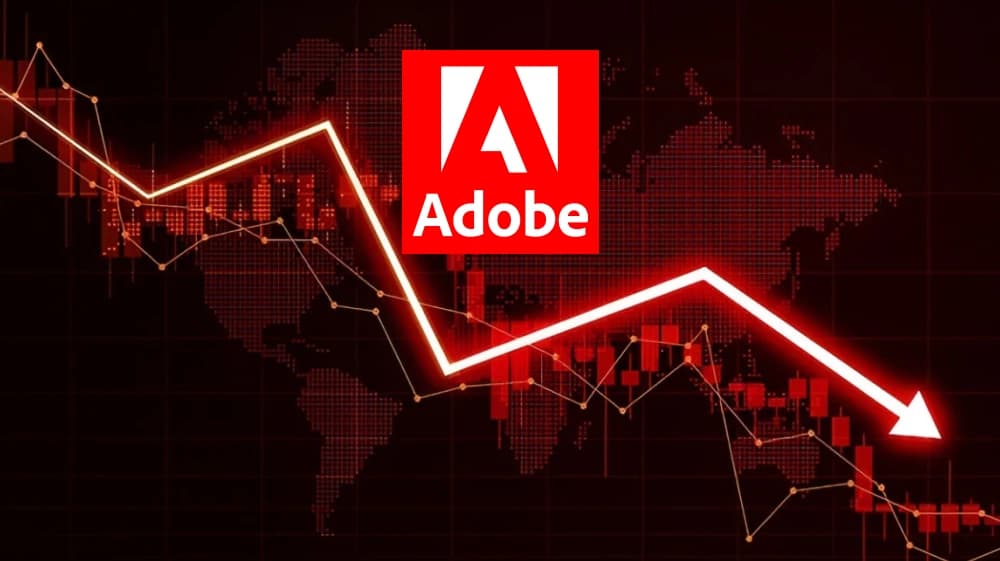
In 2025 Adobe made more money than in any of the previous 40 years: $23.77 billion in revenue, up more than 10% year over year. It was a record-breaking year.
Wall Street responded by treating the company like it was dying in real time.
While the internet got distracted by a $150 million settlement over sneaky cancellation fees, Adobe was facing a far bigger problem. The most dominant name in creative software is suddenly fighting for its life.
Record revenue and collapsing stock.
Adobe's shares once topped $688 in late 2021. Today they trade more than 60% below that peak, and the slide has only steepened over the past year. In March 2026, the man who built modern Adobe — CEO Shantanu Narayen, in charge for 18 years — announced he would step down once a successor is named. The stock dropped another 7% on the news.
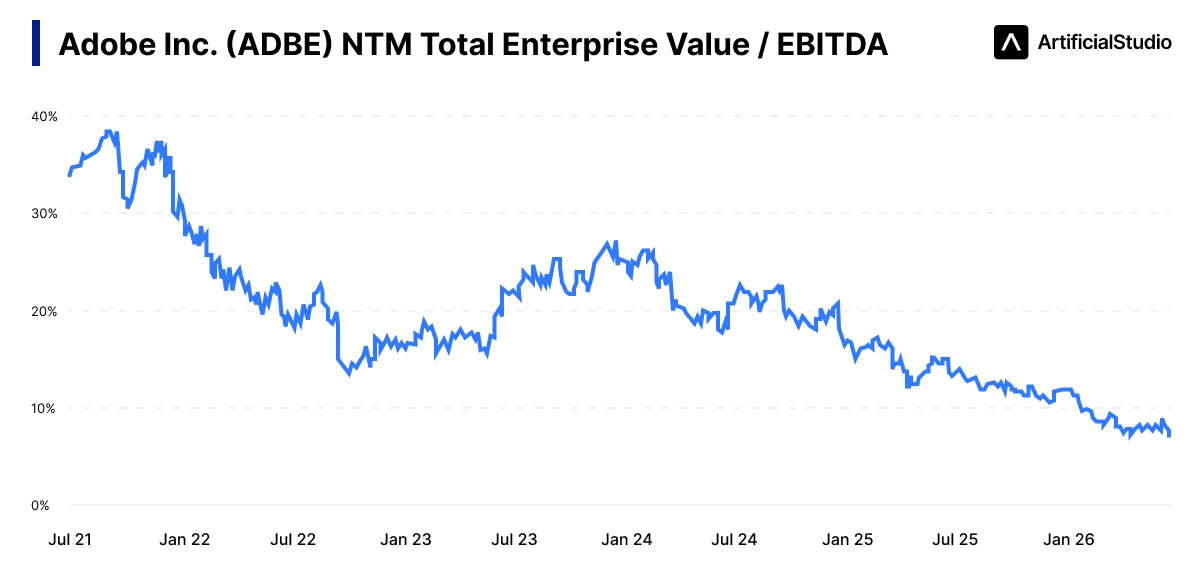
When a company is this profitable and the market still heads for the exits, it's not pricing the present. It's pricing the future. And investors clearly don't like what they see coming.
For years, the company optimized for lock-in. Most people don't buy one Adobe product: they buy the whole ecosystem, billed monthly, forever. That's a beautiful business right up until customers feel trapped. And they did.
In June 2024, the government sued Adobe for steering users into an "annual paid monthly" plan that buried a steep early-termination fee — one that could cost hundreds of dollars to escape. The cancellation path was a maze of warnings, offers, and dead ends. Adobe agreed to a $150 million settlement ($75M in penalties, $75M in free services), still pending court approval.
Around the same time, a quiet terms-of-service update convinced creatives that Adobe was claiming a broad license over everything they uploaded. Adobe walked it back and clarified it wouldn't train its AI on user content, but the damage was done. The vibe had shifted and Adobe no longer felt like a partner. It felt like a landlord.
The fees and the fine print were survivable on their own. The problem is they arrived at the exact moment customers finally had somewhere else to go.
Subscribe to get deep dives on tech and the future of creative work.
The $1 billion phantom
In 2022 it agreed to acquire Figma for $20 billion. Regulators in the EU and UK balked, and in December 2023 the deal collapsed, leaving Adobe to pay a $1 billion breakup fee for a merger that never happened.
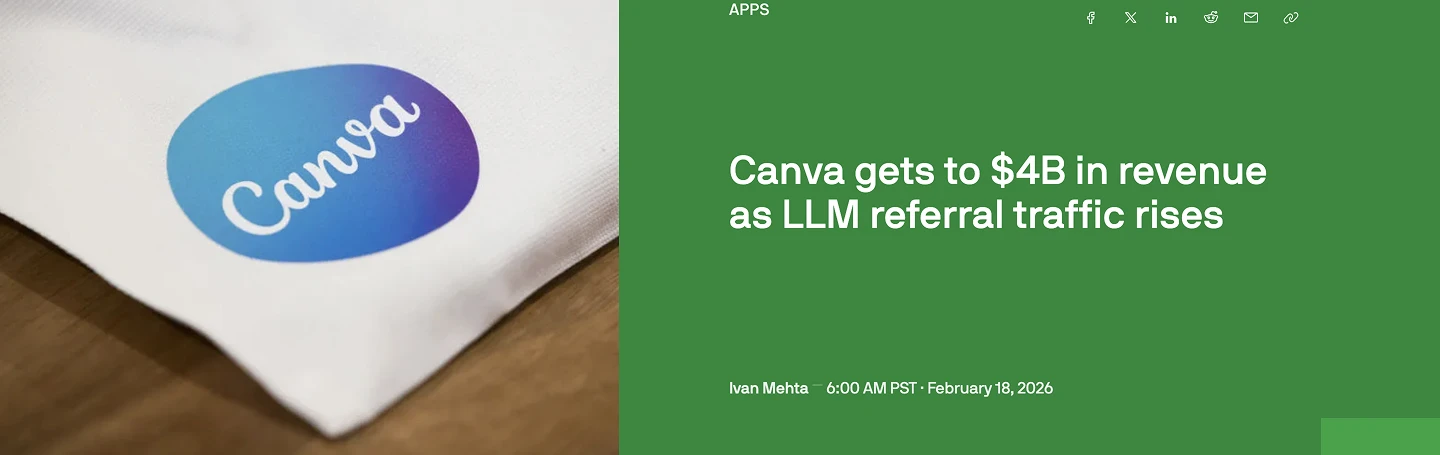
Canva, founded in 2013 on a free-to-start, browser-first model everyone could actually understand, now has over 260 million monthly users, 31 million of them paying, and roughly $4 billion in revenue. Adobe spent a decade optimizing for professionals who'd pay premium prices. Canva spent it making design feel like fun.
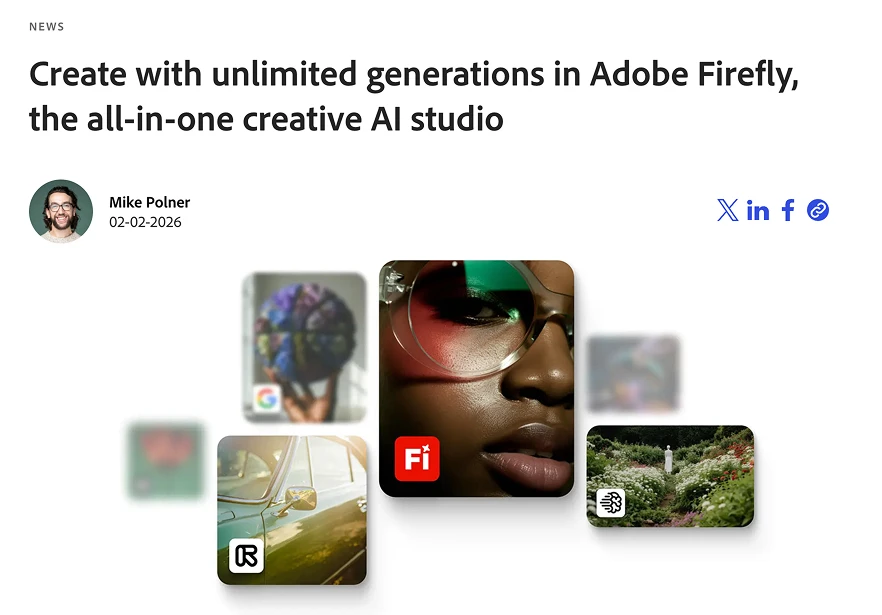
Then its generative AI model, Firefly, has now produced more than 24 billion assets since launching in 2023.
Adobe's entire value rested on one premise: high-end creative work is hard, so skilled people pay well for powerful tools. Firefly's whole pitch is that the hard part is now a prompt. Every image it generates quietly trains Adobe's most loyal, highest-paying users to ask a dangerous question:
What do we actually need Adobe for?
Adobe needs those professionals to stay subscribed, even as it teaches them they might not need the subscription at all.
And once you no longer believe Adobe is the best option, it stops looking like a creative partner and starts looking like an expensive habit.
For 20 years, "being a creative professional" meant renting one company's stack and learning to live inside it. AI broke that.
The capability that used to require a $700 app and years of muscle memory is increasingly a text box and a few seconds. The expensive, locked-in, all-or-nothing model isn't collapsing because the tools got worse, it's because the moat got cheap.
The winners in the next few years won't be the teams with the most software. They'll be the ones who turned the most ideas into finished work, for the least friction and the least money.
The question every agency and creative team is starting to ask is the same one Adobe's own users are asking:
why am I paying this much, for this many separate tools, to do work AI can now help me finish in minutes?
That's why Artificial Studio is a great option. Instead of stitching together and paying for five different subscriptions for image, video, audio, 3D and design, you get 60+ AI tools in one platform, and you only pay for what you actually use. No lock-in, no cancellation maze, no ecosystem holding your work hostage.
Try it yourself
Start creating with the tools mentioned in this article.